Annotated Bibliography
- Encyclopaedia (2024) by Weronika Gesicka
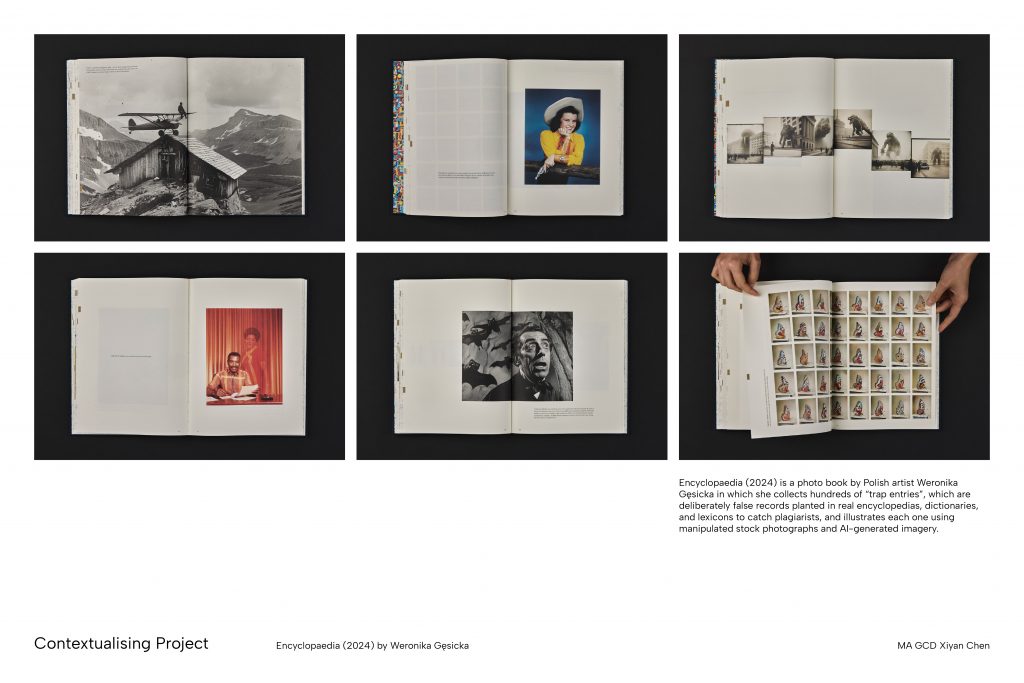
Weronika Gęsicka’s Encyclopaedia (2024) is an artist book that investigates the conditions under which photographic and textual knowledge is produced, circulated, and trusted. The project takes its source material from “Mountweazels”, which are fictitious entries deliberately embedded within encyclopaedias, dictionaries, and lexicons by editors seeking to detect plagiarism. Gęsicka collected several hundred of these trap entries from historical publications and illustrated them using a combination of manipulated stock photography and AI-generated imagery.
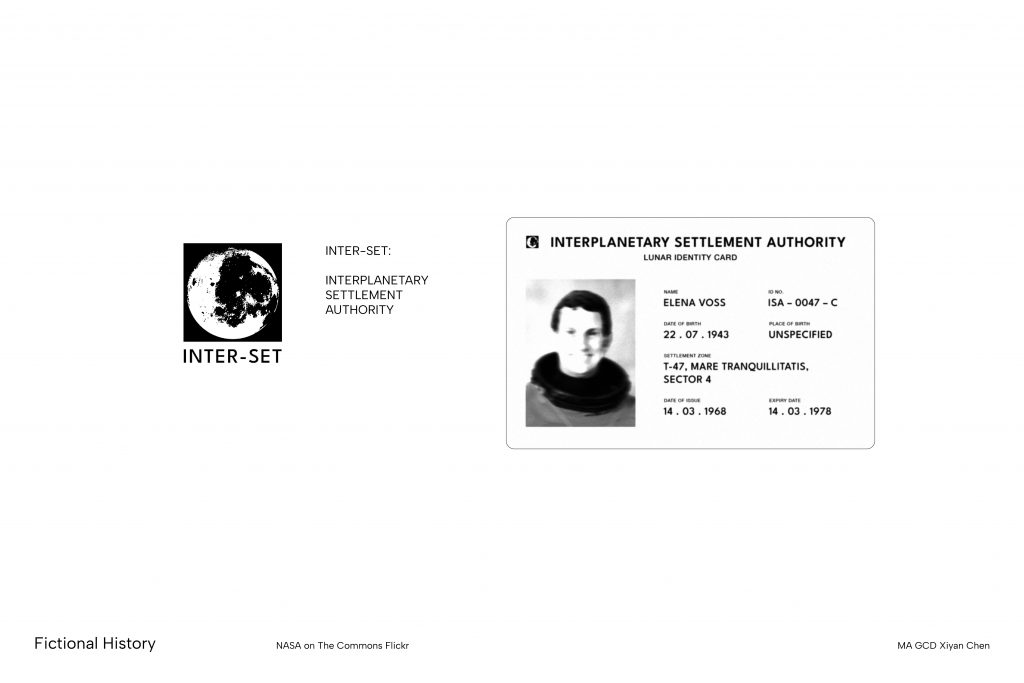
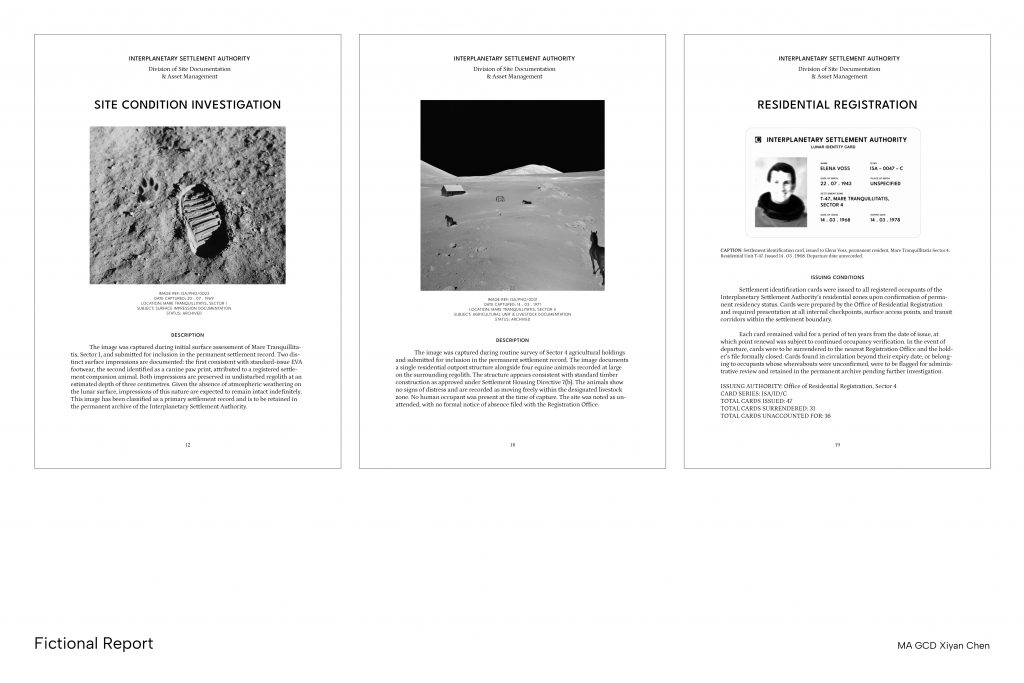
By adopting the conventions of the encyclopedic format , such as structured entries, authoritative tone, and systematic organisation, Gęsicka critiques the apparatus of knowledge production in her publication. This became the central visual framework for the development of my project. I wanted to investigate if adopting the visual language of authoritative formats could function as a method for exposing the fragility of the credibility those formats. In response, I structured my project around an archive folder containing a series of documents designed to imitate the formal conventions of institutional and academic authority.
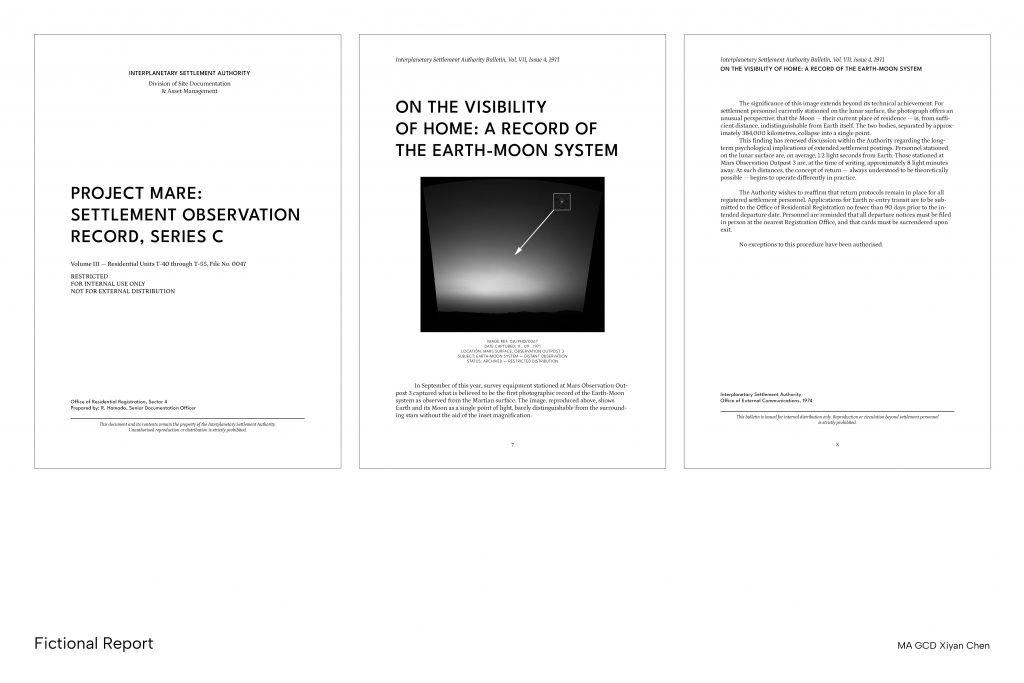
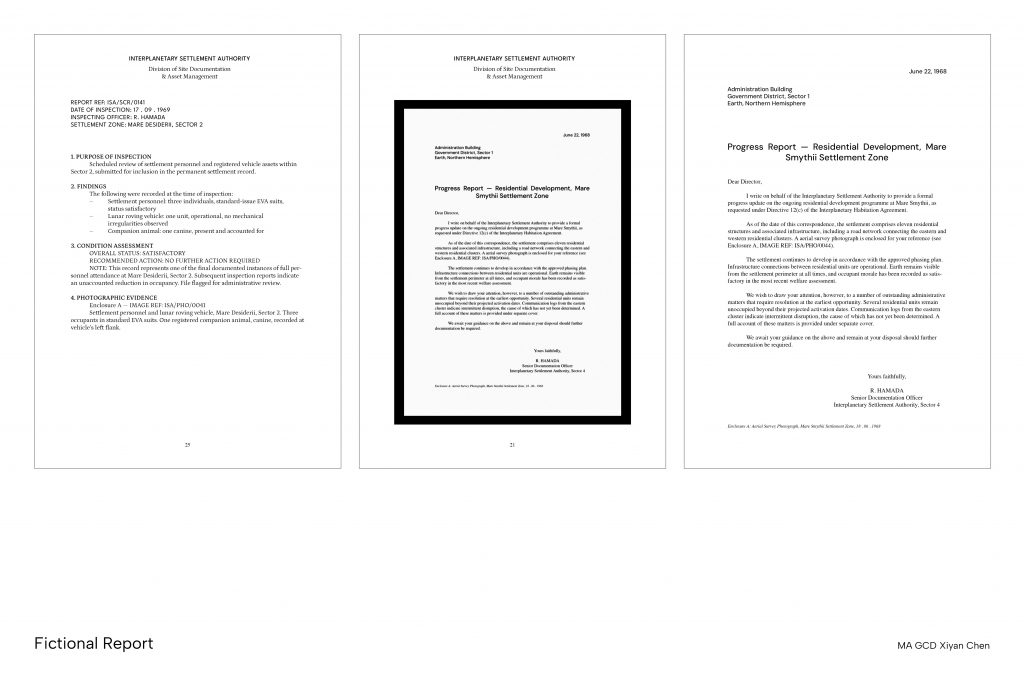
Where Gęsicka works within the encyclopedic conventions, my project extends this visual framework across a wider range of authoritative formats, each carrying its own set of institutional associations. These included pages and texts modelled on traditional textbook layouts, official certificates, formal reports, and article structures. Each document adhered closely to the visual grammar of its source format, which uses consistent typography, hierarchical organisation and formal register. By reproducing these formats with fabricated content, the project asks at what point would the viewer begin to doubt what they are reading, and what lies at the basis of this authoritative trust.
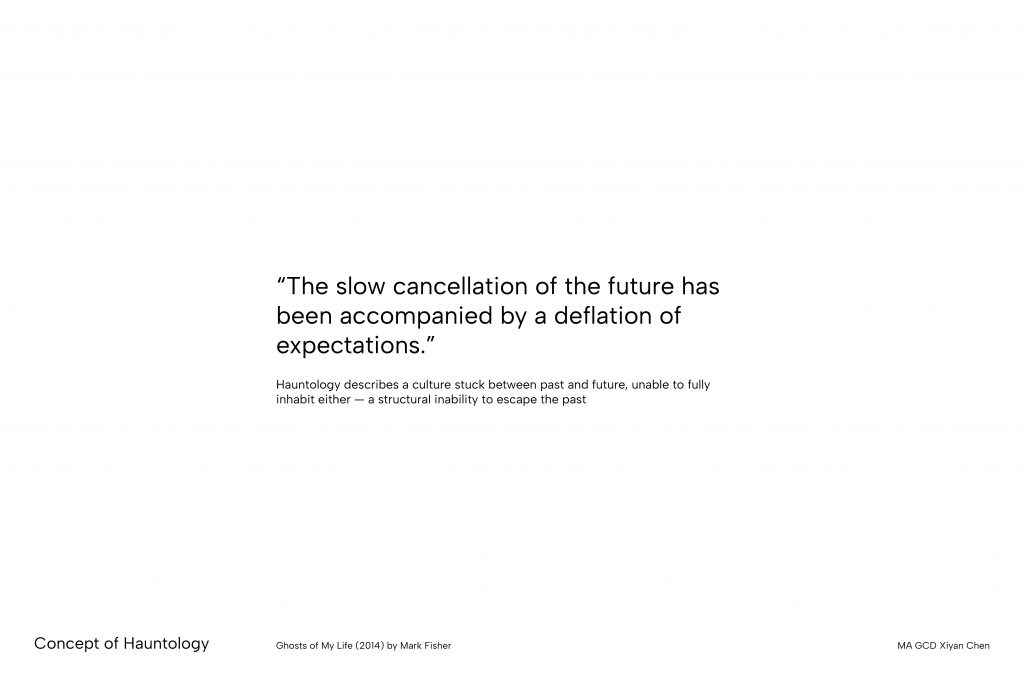
This practice also connects to my broader enquiry into hauntology as theorised by Mark Fisher. In Ghosts of My Life(2014), Fisher describes hauntology as a culture that looks to the past not out of nostalgia, but because it no longer believes in the future, which is what he calls the “slow cancelation of the future”.
Gęsicka’s method of taking images from the existing photographic archive and reworking them through digital manipulation connects closely to this idea. The stock photographs she uses are already a kind of suspended image, produced without a specific subject in mind and waiting to be given meaning. By using them to illustrate things that never existed, and combining them with AI-generated images built from similar sources, Gęsicka created images that feel historical without actually coming from history.
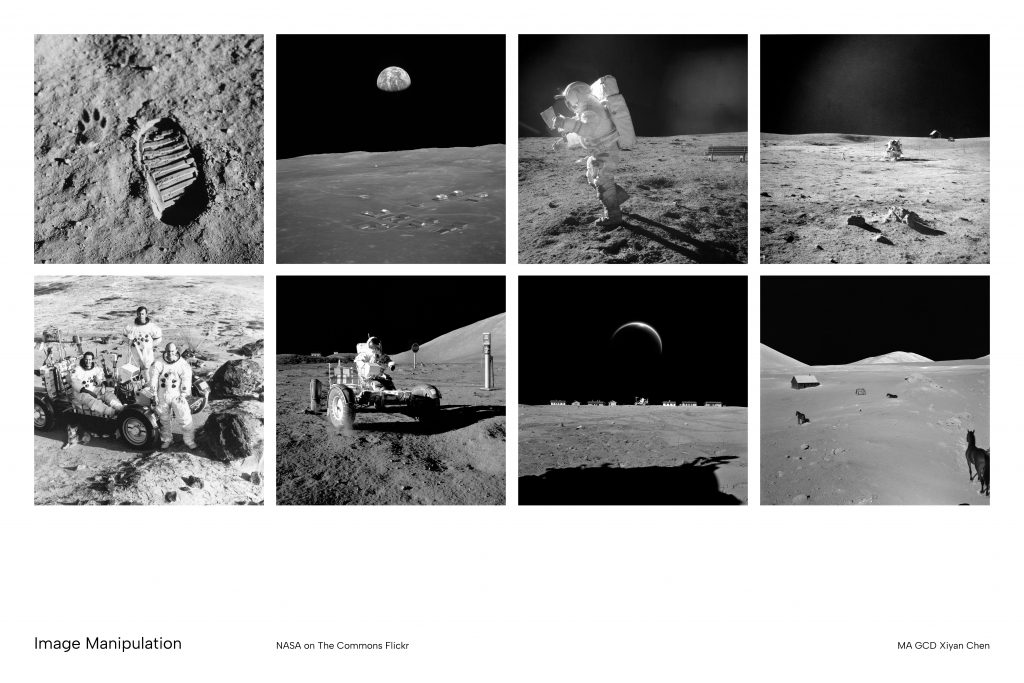
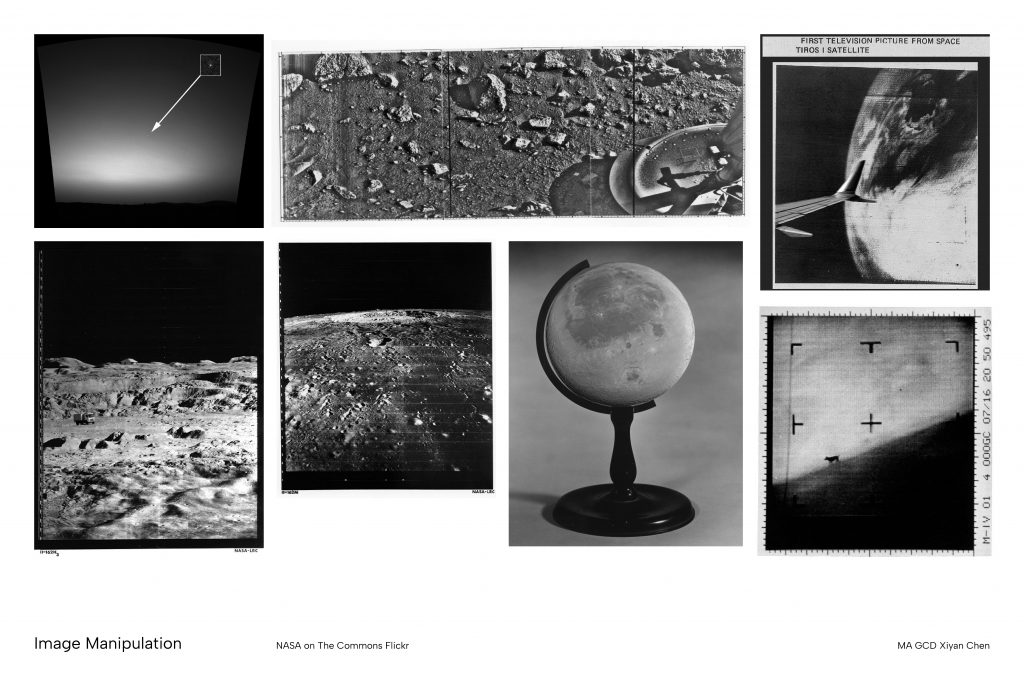
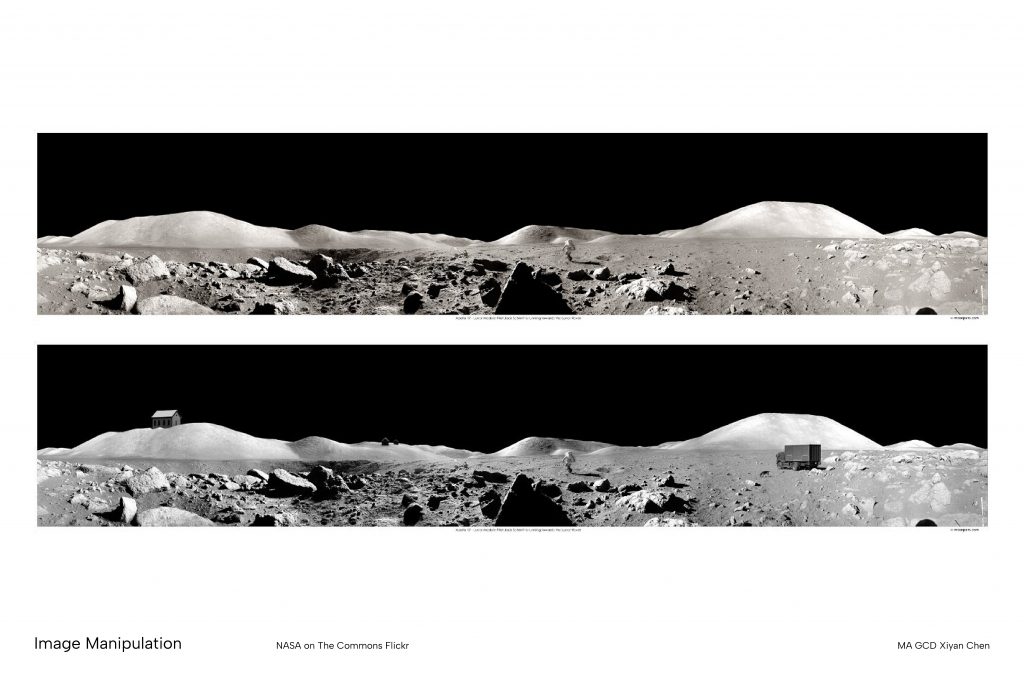
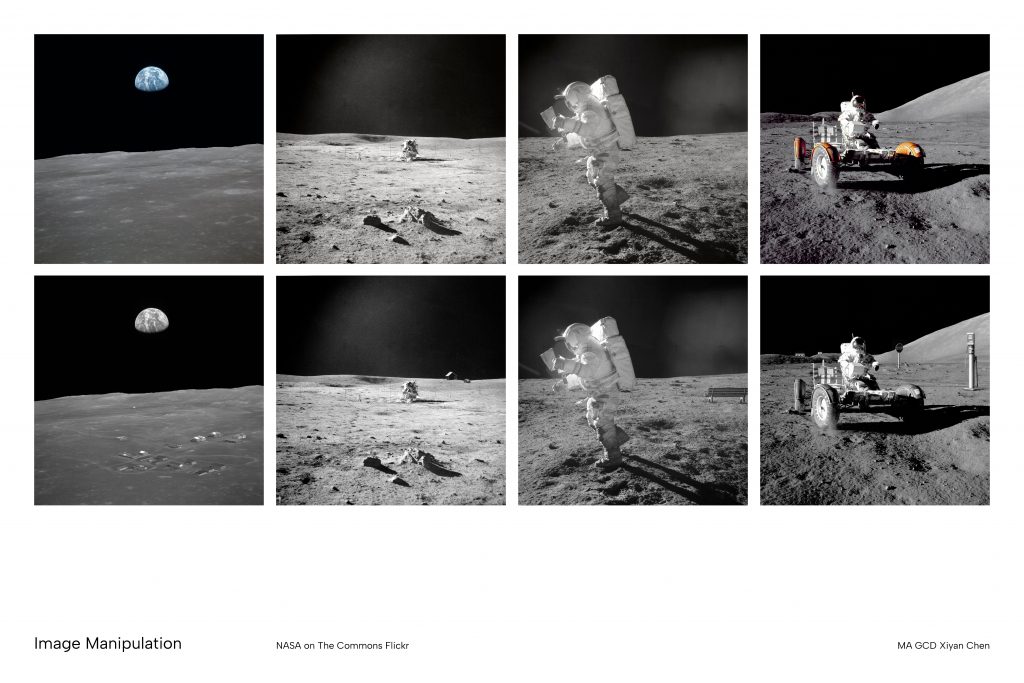
I adopted a similar method when choosing the visual contents for my project. The images in my archive documents were sourced from official image archives, which already carry the visual authority of institutional record-keeping. I deliberately introduced false and nonsensical elements generated through AI tools to narrate a new fictitious story. The result sits in an uncomfortable middle ground where the found images ground the work in something that feels real and historically credible, but the AI-generated additions introduce details that could not have existed, producing an effect that is simultaneously haunted and plausible.
This draws directly on Fisher’s framework where the found images represent a past that culture keeps returning to, and the AI interventions indicates the foreclosure of any stable meaning those images might once have held. Together, they ask whether the feeling that something once existed can be created through visual and formal means alone, even when the event itself never took place.
Gęsicka, W. (2024) Encyclopaedia [225×300 mm]. Poland: BLOW UP Press.
- On the Invention of Photographic Meaning (1982) by Allan Sekula
Allan Sekula’s essay “On the Invention of Photographic Meaning” challenges the persistent assumption that photographic images carry meaning within themselves. Sekula argues that the meaning of a photograph is never inherent but is always produced through what he calls “photographic discourse”, which is the system of cultural, social, and institutional relations within which an image is received and read. A photograph is not a record but an expression of thoughts. It is a medium that carries an incomplete message that depends entirely on its surrounding context in order to be understood and circulated.
Central to this discussion is Sekula’s rejection of the idea that photography functions as a universal language. He observed that images are widely treated as if their meaning resides within their visual surface independent of any framing. Sekula argues that photographic literacy is a learned set of cultural conventions, and the apparent neutralness of an image is always a product of its contexts. The photograph does not communicate truth, but it is made to appear truthful through the framework in which it is presented.
This idea prompted me to look at how authoritative framing operates. If photographic meaning is produced rather than found, then the contexts in which images are placed, such as the captions, layouts, institutional formats, and modes of circulation surrounding them, are thus not neutral containers but active producers of meaning. The same image placed within a scientific report, a personal archive, or an advertising campaign will be read in fundamentally different ways. This is not because the image has been accommodated to different formats, but the discourse framing its purpose and value has changed.
Working from Sekula’s argument that the image is neutral until framed, I have been investigating the degree to which authoritative document formats, including certificates, reports, and formal articles would shape how their visual contents are received. This also opened up the idea that entirely fictional histories can be made to feel real not through the fabrication of convincing images alone, but through the reproduction of the formats and conventions within which real histories are typically recorded and circulated.
The documents in my fictitious archive folder contain images sourced from official archives, photographs that already carry associations of institutional credibility and historical record. I introduced obviously false and nonsensical elements generated through AI, but rendered such in a visual style that closely matches the surrounding material by manipulating the image grains and lighting. The fabricated images were then incorporated into the formal structure of fictional official documents, inheriting the credibility induced by the authoritative formats.
I wanted to create an uncanny and disturbing feeling through these ambiguous images and texts. It was clear that something was wrong but the viewer may not immediately be able to locate where the flaw resides. This aligned with Sekula’s argument that meaning is produced by framing rather than by the image itself, thus a false element introduced within a credible format can also absorb the authority of that format and pass as real. The viewer’s trust is not in the image but in the discourse surrounding it.
Sekula, A. (1982) ‘On the Invention of Photographic Meaning’, Thinking Photography. Communications and Culture. London: Palgrave.a
- Camera Lucida (1981) by Roland Barthes
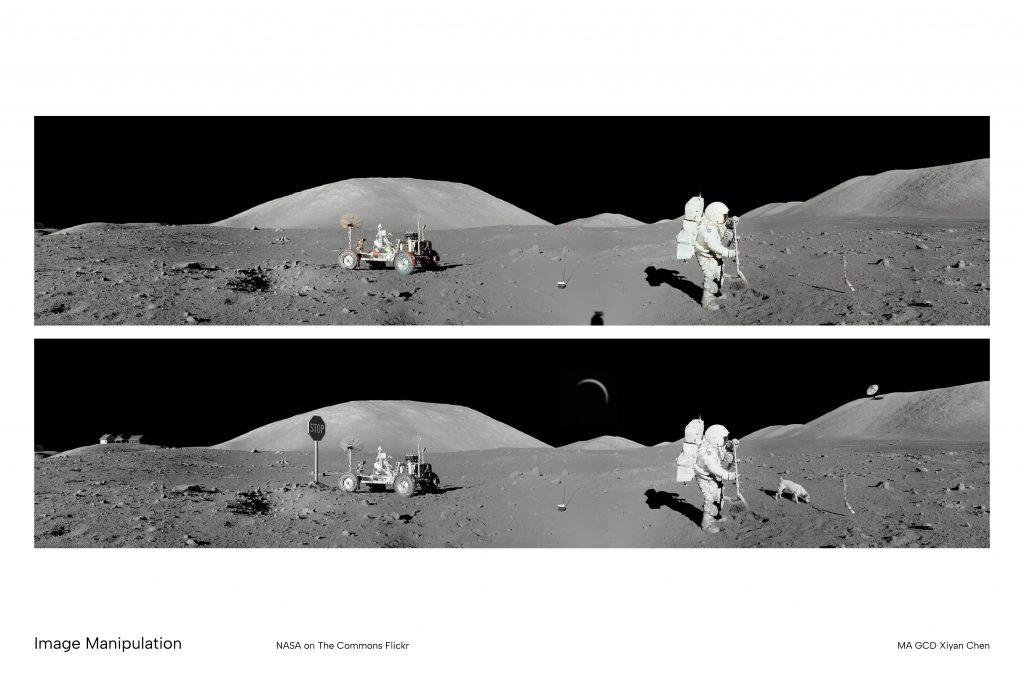
Roland Barthes’ Camera Lucida (1980) proposed a distinction between the studium, which is the genera legible context of a photograph, and the punctum, which are details that would “prick” the viewer unexpectedly. This framework helped me to position my image manipulations within a broader context.
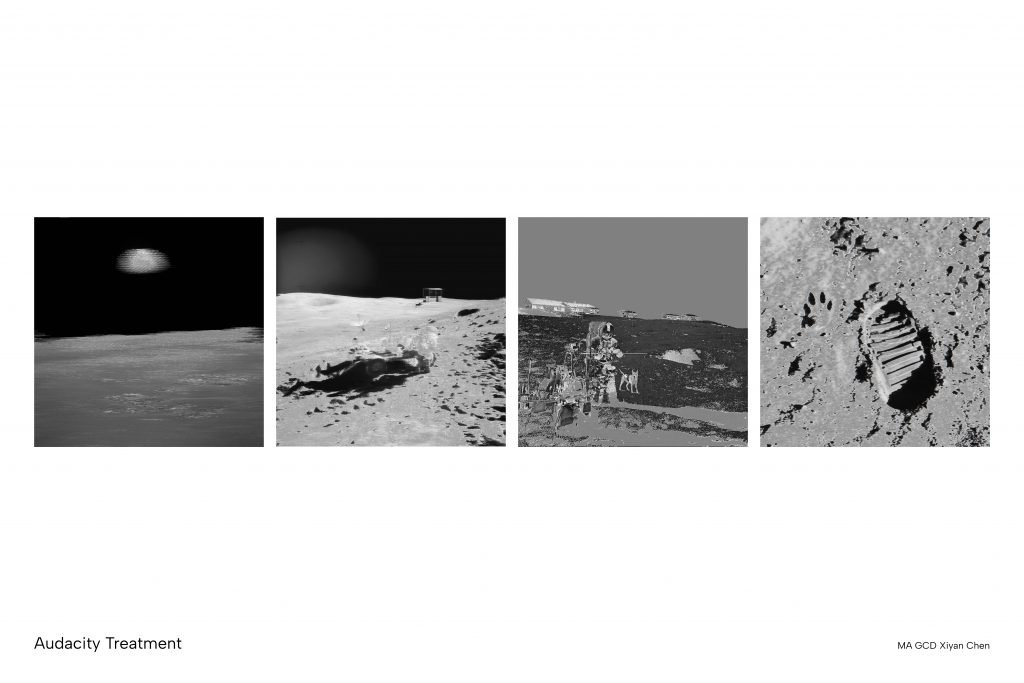
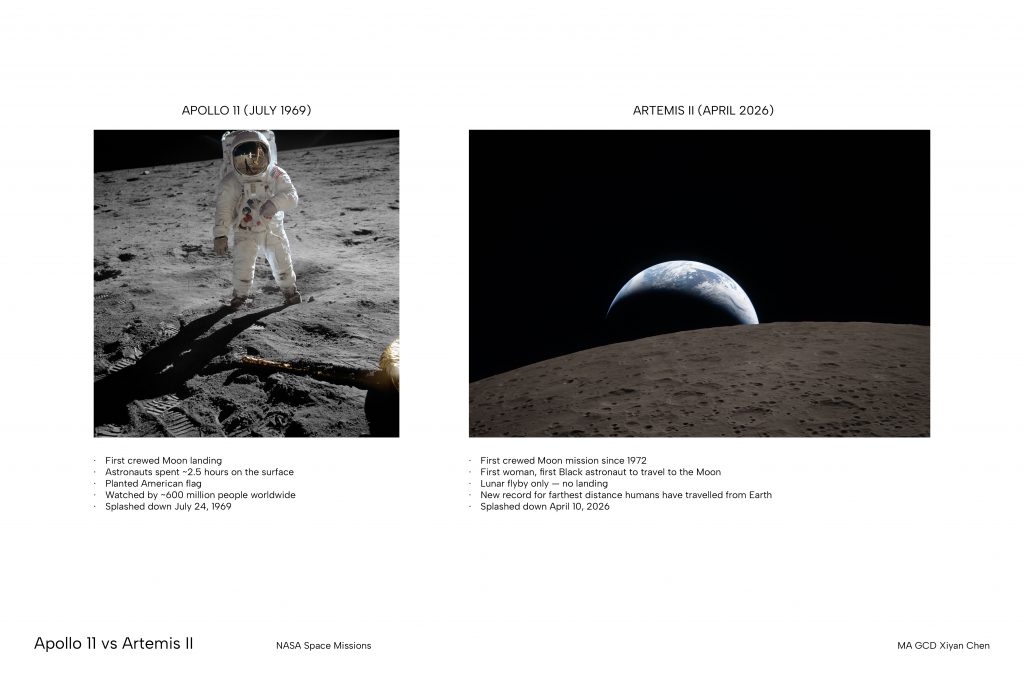
The NASA Apollo images carry the weight of an bureaucratic studium because they are institutional documentary photographs that are already situated within a familiar historical and scientific context. The AI generated elements I introduced, such as car, dog, and stop sign, thus function as the punctum of these images. They should not be there, but they appear with photographic plausibility, which creates a strong sense of uncanniness and tension. I am interested in how this deliberately introduced wrongness distorts the reality by illustrating a future that was imagined but never arrived.
Barthes, R. (1981) ‘Punctum: Partial Feature’, Camera lucida : reflections on photography. New York: Hill & Wang.
- Everyone’s Photos Any License (2015-2016) by Penelope Umbrico
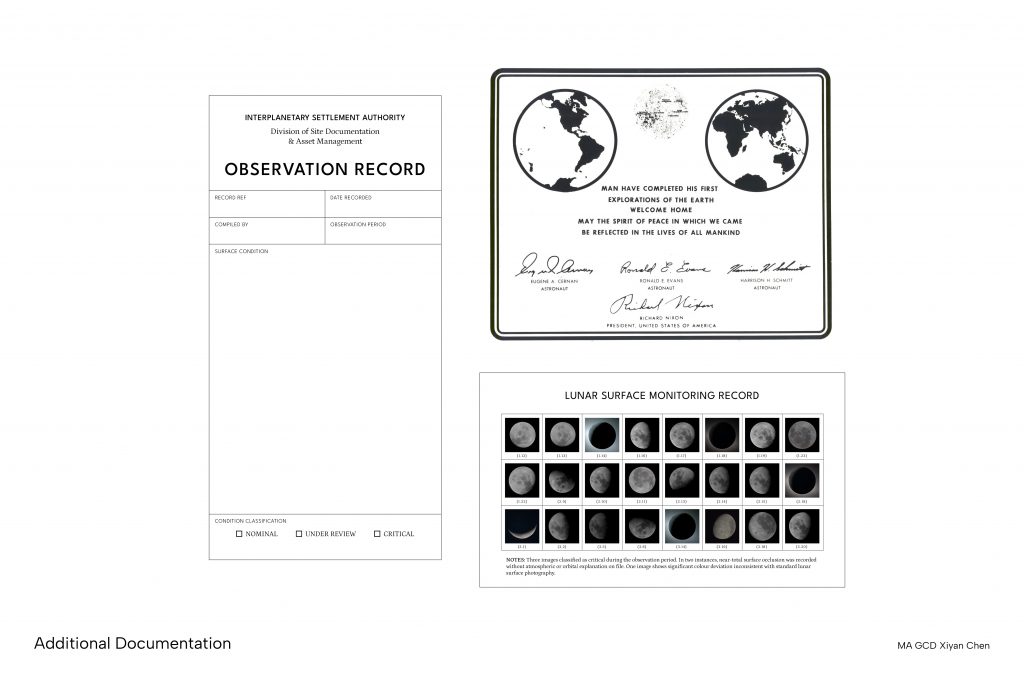
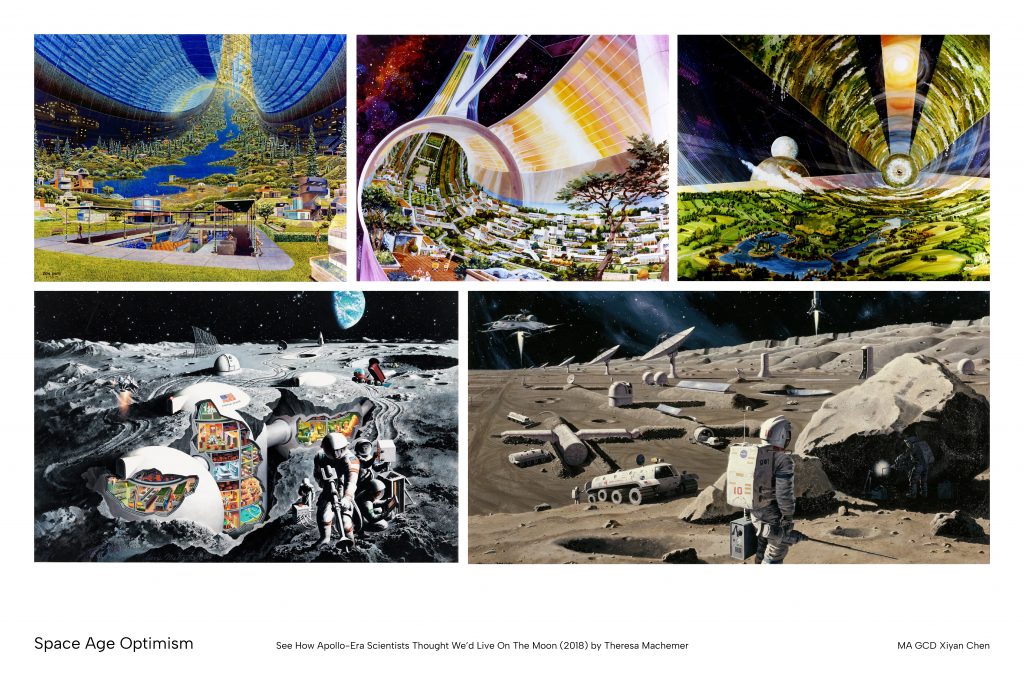
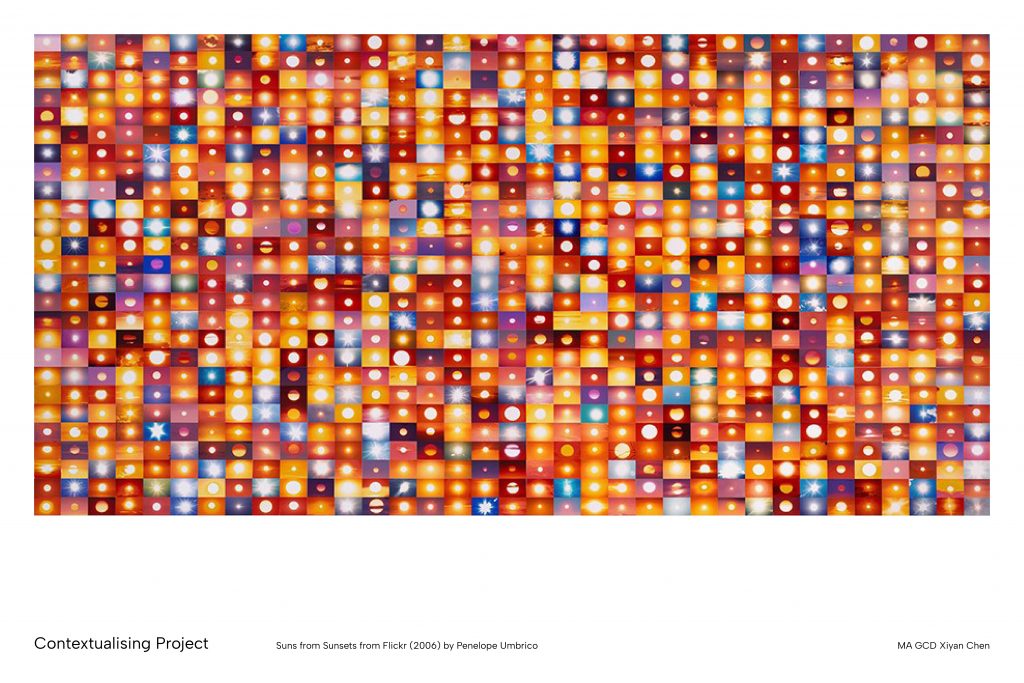
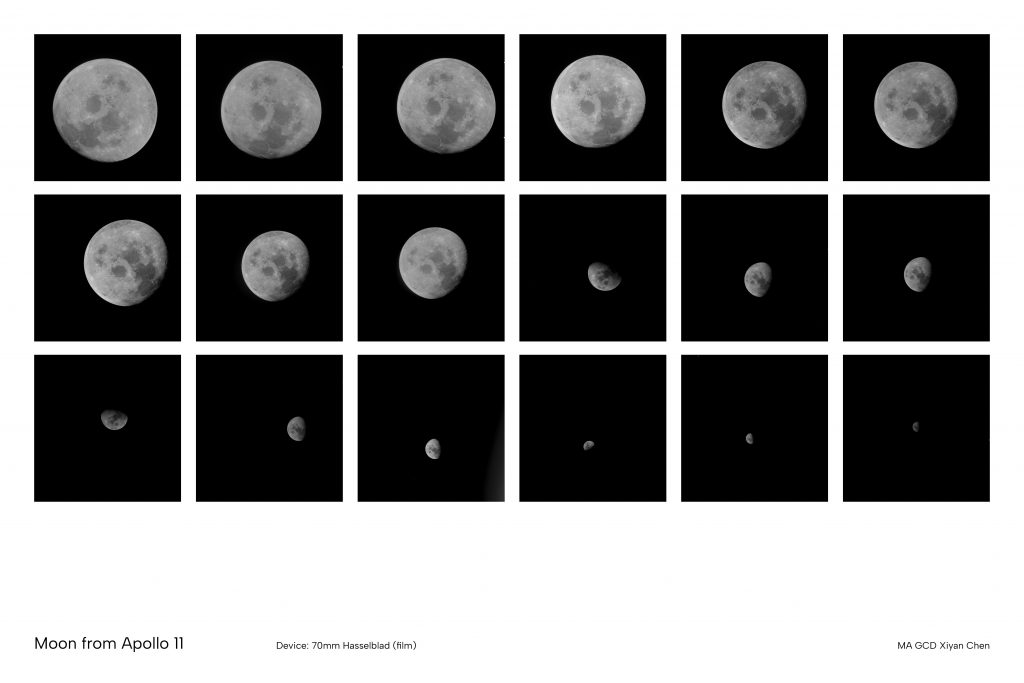
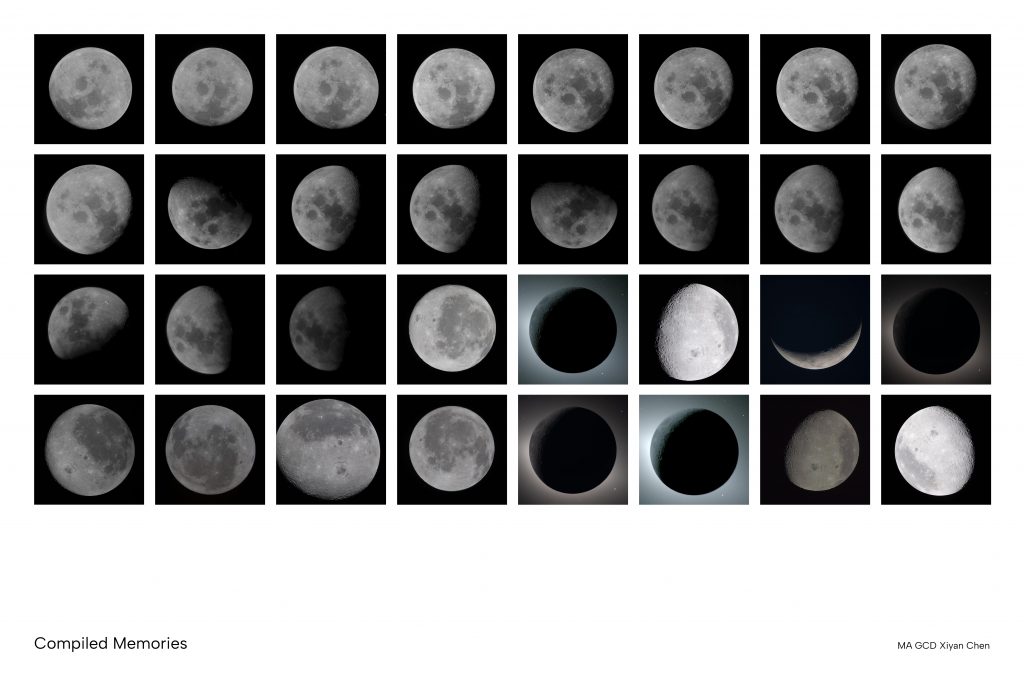
Penelope Umbrico’s Everyone’s Photos Any License is a collection of amateur moon photographs sourced from Flickr, where she treated the accumulated mass of images as a collective rather than individual acts. This made me consider the power of collection memory. If a collective visual memory of the moon can be constructed through the accumulation of amateur images, then it becomes plausible that a similar accumulation of fabricated settlement imagery might generate its own kind of belief. Hence I curated the photographs to present different dimensions of the narrative by combining mundane rituals with official inspections and events.
Umbrico’s work also challenged my assumptions about what counts as an important image. The photographs she works with were never officially published or institutionally verified, yet together they form a significant record of how a culture has looked at and imagined the moon. This contradicts with my use of bureaucratic document formats, which makes me question whether authoritative framing is important for an image, or does it simply make it a piece of political artefact.
Umbrico, P. (2015) Everyone’s Photos Any License [collection of photographs].
- In Defence of Poor Image (2012) by Hito Steryl
Hito Steyerl’s In Defence of the Poor Image (2009) argues that images degraded through circulation and compression carry their own political and aesthetic value. The resolution of an image is not a neutral technical quality, but is associated with questions of access, power, and what kinds of images are considered worthy of preservation.
This shaped my choice of using archival images as a way to exploit this conventional power structure. There is a particular authority attached to low resolution archival imagery, a sense that because it looks old it must be true. I used the assumed credibility of these poor image against itself by deliberately introducing fabricated elements into images that already carry the power of official documentation. The graininess and staged camera angles thus becomes a kind of alibi for its historical value.
Steyerl, H. (2012) ‘In Defense of the Poor Image’, The Wretched of the Screen. Berlin: Sternberg Press, pp. 31–45.
- What do pictures want? (2005) by W.J.T. Mitchell
W.J.T. Mitchell’s What Do Pictures Want? (2005) proposes the idea that images should not be understood as passive carriers of meaning, but with its own agency that exceeds the intentions of their makers. He asks not only what images mean but what they want, treating them as “quasi-subjects” whose effects in the world cannot be fully controlled or anticipated.
I began to consider this shift of meaning when archival photographs are removed from their original institutional context and used to construct a fictitious history. These images were produced with a specific documentary and propagandistic purpose that is to record and project national authority. But by introducing fabricated elements into them, I am allowing the images to shift toward a life that was never part of their original intent. Mitchell’s discussion on the social life of images is also relevant when archival photographs do not remain fixed, but accumulate new meanings as they circulate and get repurposed. Thus my manipulation is not a destruction of the original images, but a continuation of a process that was always already happening.
Mitchell, W.J.T. (2005) What Do Pictures Want: The Lives and Loves of Images. University of Chicago Press.
- Invisible Cities (1972) by Italo Calvino
Italo Calvino’s Invisible Cities (1972) is a series of descriptions of imaginary cities narrated by Marco Polo to Kublai Khan. The Khan’s empire has grown too large for him to visit directly, so Marco Polo’s descriptions become a substitute, a way of knowing places through language and inventory rather than experience.
Based on this fictitious narration, I chose not to construct a direct narrative of the moon settlement but instead to leave behind fragments, such as inspection reports, identification cards, observation records, and condition surveys. The story is never told directly but implied through the accumulation of partial evidence, in the same way that Calvino’s cities are never visited but only described. Fictitious storytelling of this kind does not offer a definitive truth but creates an impression, a sense that something happened here without ever fully saying what. Calvino’s taxonomy of imaginary cities suggests that the act of cataloguing is itself a way of imagining, and that an inventory of things that never existed can carry as much weight as a record of things that did.
Calvino, I. (1972) Invisible Cities. Orlando: Harcourt Brace & Company.
- What is New Media? (2002) by Lev Manovich
Lev Manovich’s The Language of New Media (2001) argues that new media fundamentally reorganises cultural production around the logic of the database. Manovich suggest that the new media is a collection of items without inherent narrative order, and that the automation of media production transforms the relationship between authorship and the image.
This phenomenon can be observed in the AI generated elements I introduce into NASA photographs. These visuals are products of database logic that have been assembled from collections of existing image data, which is a process of selecting and recombining visual references rather than originating new sources.
This prompted the question: If the fabricated elements in my images are drawn from the same collective visual culture as the archival photographs themselves, then the distinction between document and invention becomes harder to maintain. The precarious use of AI generative tools reflects a broader shift in how images are produced and what authorship means.
Manovich, L. (2002) ‘What Is New Media?’, The Language of New Media. Cambridge, MA, USA: MIT Press (Leonardo), pp. 18–55.
- Depravity’s Rainbow (2018-2023) by Lewis Bush
Lewis Bush’s Depravity’s Rainbow (2019) use photography and archival material to explore the violent origins of space exploration by tracing its history from Nazi rocket technology built on slave labour through to the postwar careers of the same scientists at institutions such as NASA. The project argues that the militaristic and imperial dimensions of space exploration have consistently concealed themselves behind a narrative of peaceful scientific progress.
This project introduced me to the political and social sides of bureaucratic images. The NASA photographs I use as source material are already products of a visual and political culture that carefully managed what space exploration was to be publicly received. Bush’s project makes visible the history that official documentation actively works to suppress. I also referred to Bush’s method of combining contemporary and archival images as a way to construct rather than simply record narratives. This informed my understanding on the power of manipulated images to illustrate fictions by assembling the appearance of institutional truth.
Bush, L. (2023) Depravity’s Rainbow [20×25 cm]. London: Disphotic Editions.
- Ferox, the Forgotten Archives (2018) by Nicolas Polli
Nicolas Polli’s Ferox: The Forgotten Archives (2018) constructs a complete fictional institutional history of a fabricated space agency, presented entirely through the visual language of official scientific documentation. Polli demonstrates that committing fully to the formal conventions of scientific and administrative documentation is itself a conceptual act, the design is not illustrating a fiction but producing the conditions under which the fiction becomes believable. This became the central visual inspiration for my project.
The book’s use of dense data tables to catalogue meteorite observations with columns for classification, date, country, and region, formatted with the neutral typographic logic of International Style design. Handwritten letters, reproduced on dark backgrounds, introduce a personal register that sits against the clinical objectivity of the surrounding data. This reinforced my exploration with the specificity of official document formats, such as scanned letters, officer names, and record cards. I also employed consistent typography, layout, and information hierarchy throughout the publication to demonstrate institutional authority.
Polli, N. (2018) FEROX, The Forgotten Archives [21.5x30cm]. Ciao Press.
- The Burden of Representation (1988) by John Tagg
John Tagg’s The Burden of Representation (1988) argues that photographs do not inherently carry truth, but are granted authority by the institutions that produce and circulate them. The medium of photography was adopted by state bureaucracies because it could be made to appear objective, hence its meaning is conveyed by the institutional context in which it appears. The document, the file, and the official report formats in my archive are the frames that make a photograph evidence rather than image.
By placing manipulated photographs inside bureaucratic document structures, complete with reference numbers, issuing officers, and classification systems, I am replicating the exact mechanism Tagg describes. The form carries enough authority to make the fiction feel like documentation. I also became more conscious of the ideologies being imposed by the formal systems, whether the archive is critiquing that authority or being restrained by the kind of content that can be used to depict fictitious narratives.
Tagg, J. (1988) The burden of representation : essays on photographies and histories. Basingstoke: Macmillan.