Category: Unit 1

  • U1 Methods of Cataloguing Written Response

    Methods of Cataloguing unit explored experimental approaches to how information is being arranged and categorised to create meaning. I catalogued a section of texts from Shannon Mattern’s article, Library as Infrastructure(2014), using different approaches to further analyse its content and modes of communication.

    In my first method of cataloguing, I organised the information according to its linguistic properties, ranging from academic terminology, technological vocabulary to metaphorical expressions and philosophical discourses. This approach was inspired by the administrative methods described in Benedict Anderson’s writing in Census, Map, Museum, which required information to be categorised based on “totalising classificatory grid”(2006, p.171). This ensured that everything is “determinate” and hence definite and countable, neglecting the space for obscurity that often exists in the context of language.

    This “serialisation” of content assumed that information is made up of “replicable plurals”(Anderson 2006, p.180) to simplify the reading of large quantities of data. However, this method cannot democratise the access to meaning in the case of written texts. It was almost impossible to produce any tangible meaning out of these disjoined words and phrases if catalogued according to its linguistic properties. There is the risk of producing anomalies when syntax has been destroyed to serve the rigid categorisations. By taking apart the text into short phrases or even singular words, its highly academic and technical vocabulary demonstrates a scrutinised approach towards the discourse. This only provides an overview of the tone of voice and the nature of content, which gatekeeps comprehension of meaning to a limited group of audience.

    The second method focused on the conceptual framework of distinct sentences or phrases. Referring to Michel Foucault’s ideas in The Order of Things, the establishment of a “system of elements” and a “preliminary criterion”(2001, p.xxi) to sort entities is the foundation of any cataloguing methods, hence I created a set of headings to act as the “common locus”(Foucault 2001, p.xvi) for information to be classified. The categories included social functions, technological transformation, infrastructure metaphors, historical evolution, and knowledge production models.

    The process of conceptual cataloguing revealed the intricate layers of meaning that extend beyond mere linguistic properties. By employing Foucault’s epistemological approach, I noticed how meaning is not simply a static entity but a bridging of contextual elements. This process is “more dubious”, but “more true”(Foucault 2001, p.xxiv) than giving certain expressions an explicit form. The conditions of possibility was unable to be contained within the linguistic properties of a singular word, but works together with punctuation, grammar, and syntax to construct sophisticated meanings.

    This exploration of cataloguing methods investigates the complex processes of creating meaning through information organisation. By challenging traditional cataloguing methods, I observed how meaning emerges not through rigid classification, but through nuanced interactions between language, context, and conceptual frameworks, ultimately highlighting the intricate nature of knowledge production and communication.

    Bibliography

    Anderson, Benedict. (2006) “Census, Map, Museum,” in Imagined Communities: Reflections on the Origin and Spread of Nationalism. London, UNITED KINGDOM: Verso, pp. 163–185. Available at: http://ebookcentral.proquest.com/lib/ual/detail.action?docID=5176951 (Accessed: October 24, 2025).

    Foucault, M. (2001) “Preface,” in The Order of Things. Oxford, UNITED KINGDOM: Taylor & Francis Group, pp. xvi–xxvi. Available at: http://ebookcentral.proquest.com/lib/ual/detail.action?docID=240649 (Accessed: October 25, 2025).

    Mattern, S. (2014) “Library as Infrastructure.” Available at: https://placesjournal.org/article/library-as-infrastructure/?cn-reloaded=1 (Accessed: October 24, 2025).
  • U1 Methods of Cataloguing Final Delivery

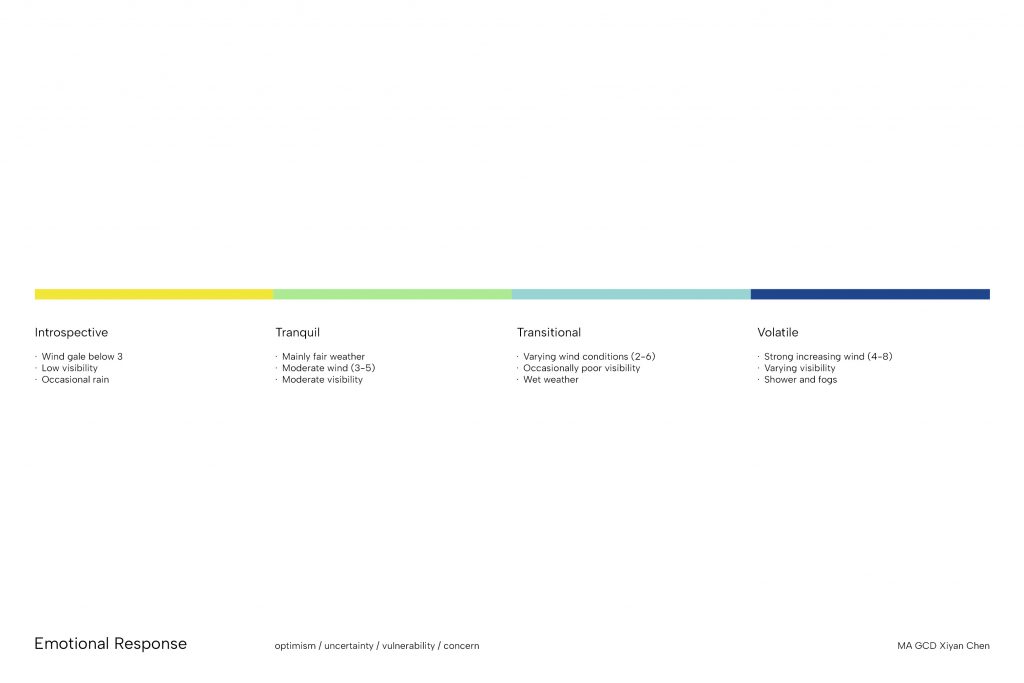
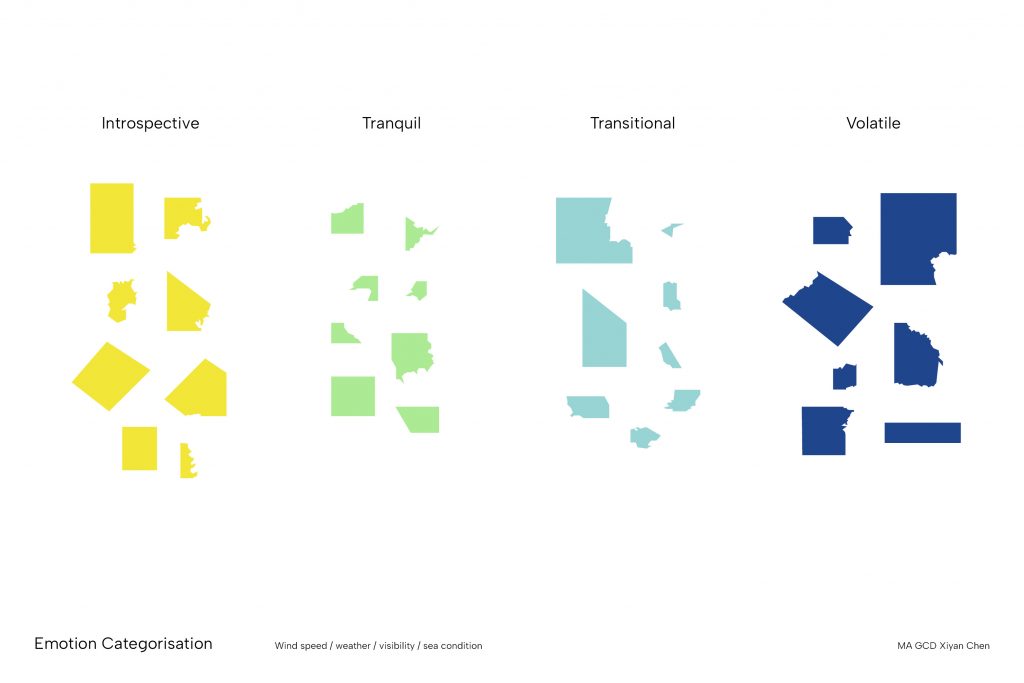
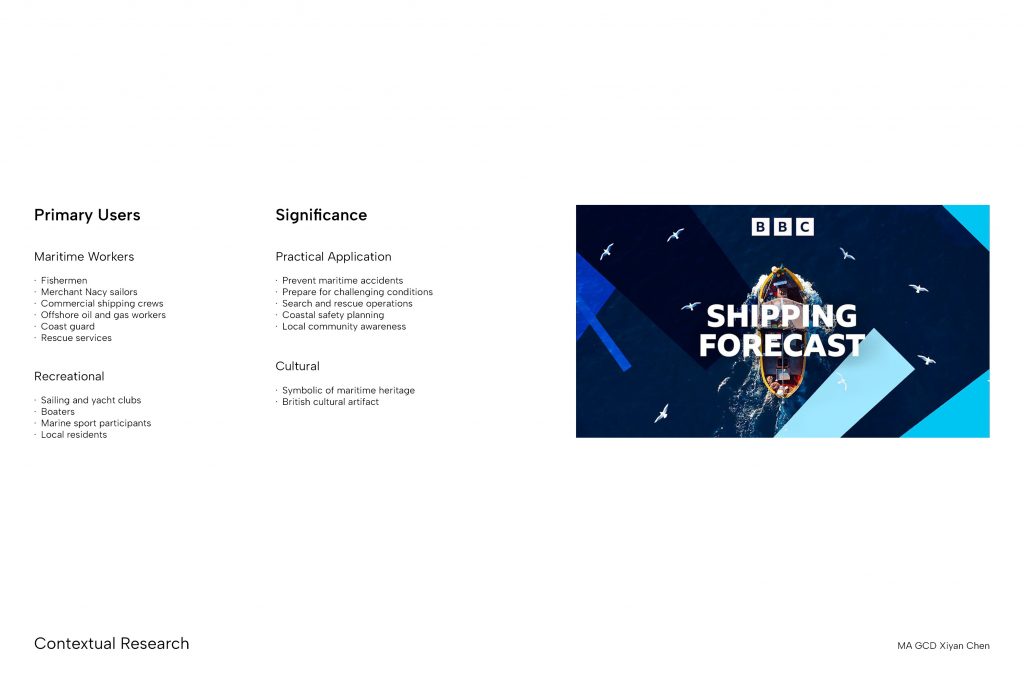
    Emotional Mapping

    • Wind as emotional energy and direction
    • Sea state as emotional stability and complexity
    • Weather as emotional processing and release
    • Visibility as psychological clarity and perception

    Delivery Method

    • Categorised based on emotional state
    • Colour coordination for more accessible identification
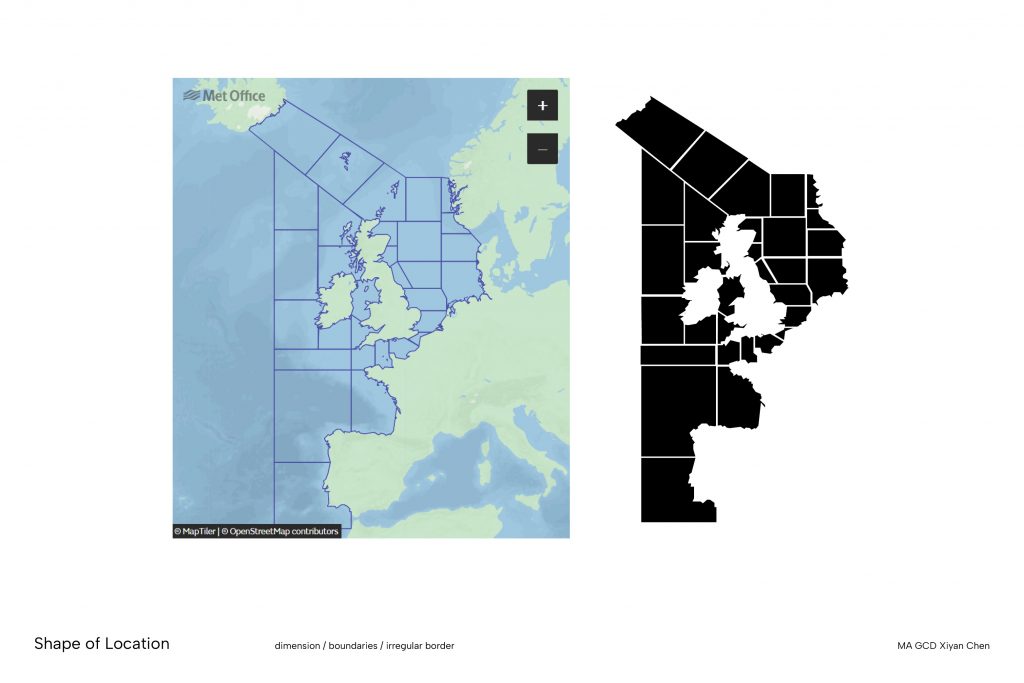
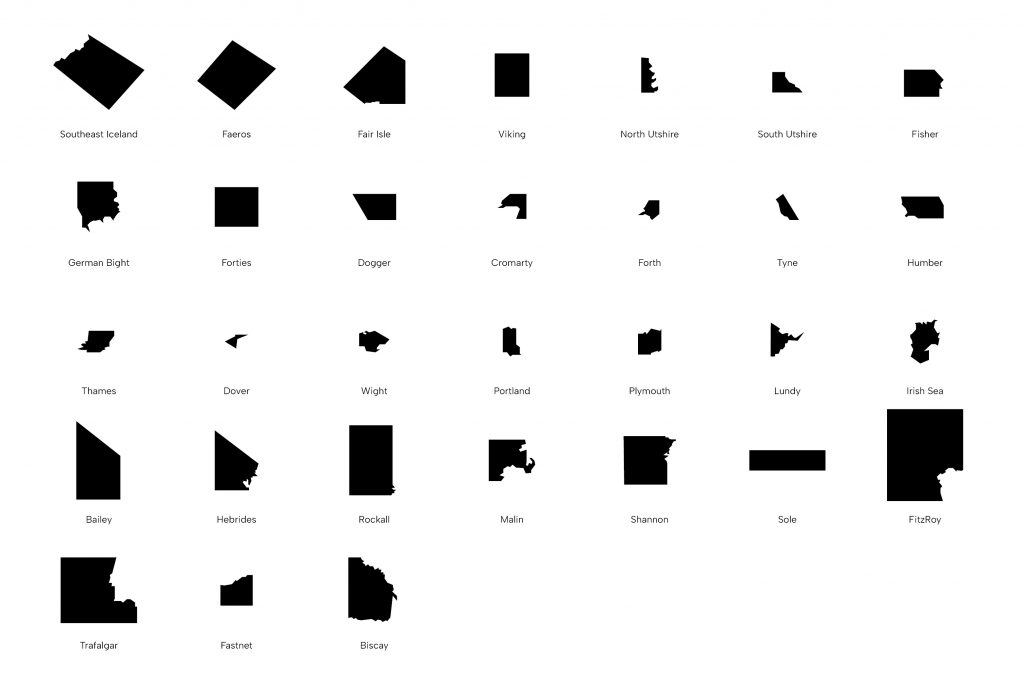
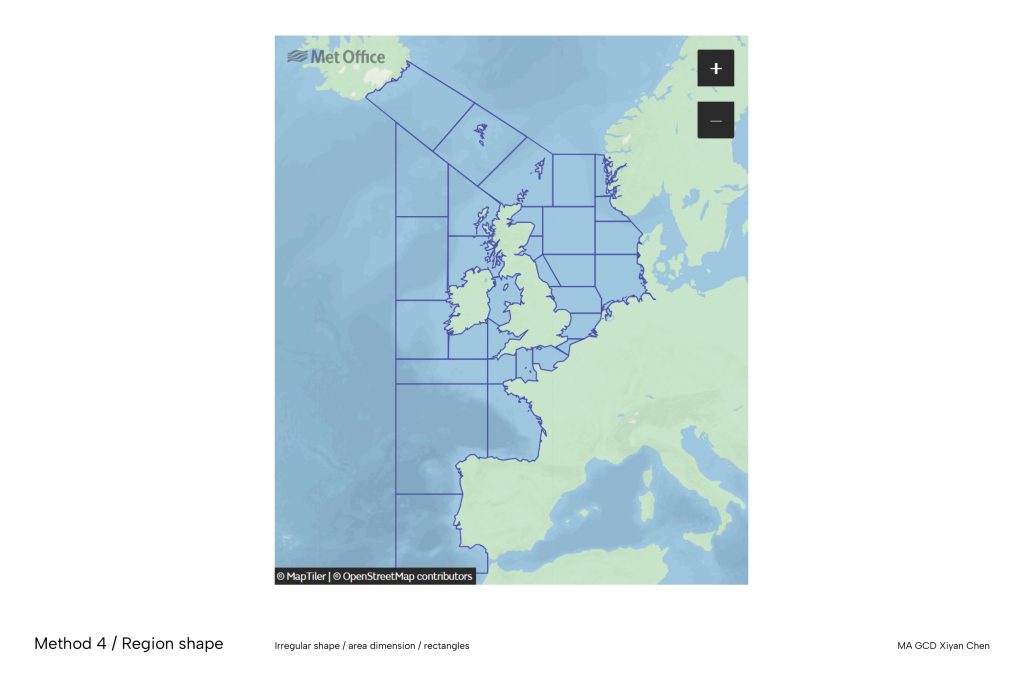
    • Using shape of each ocean zone instead of name

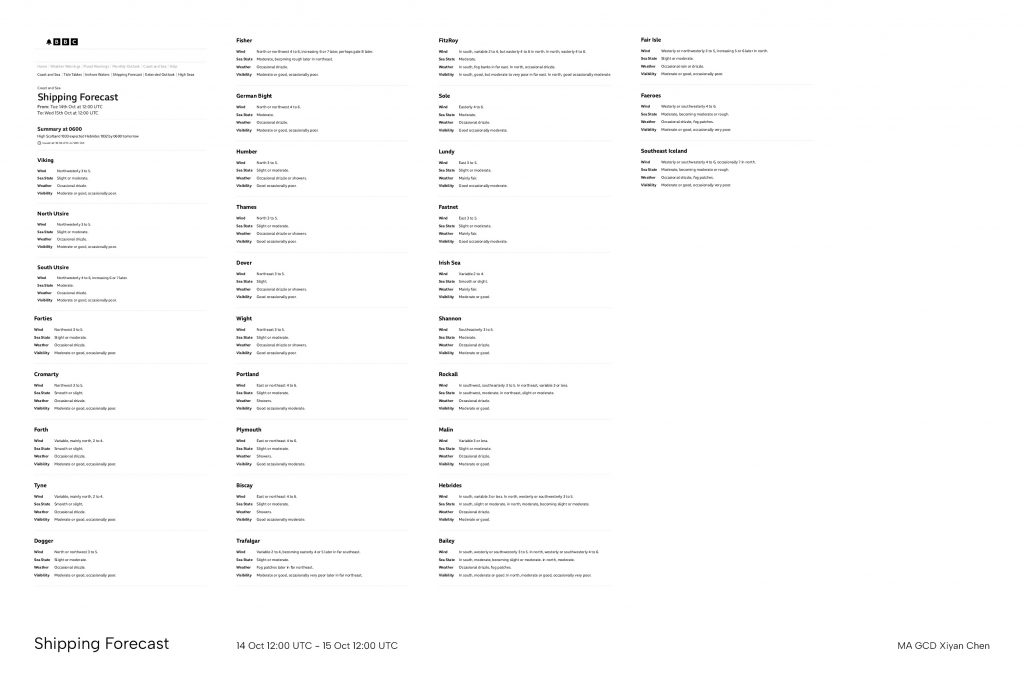
  • U1 Methods of Cataloguing Initial Experiments

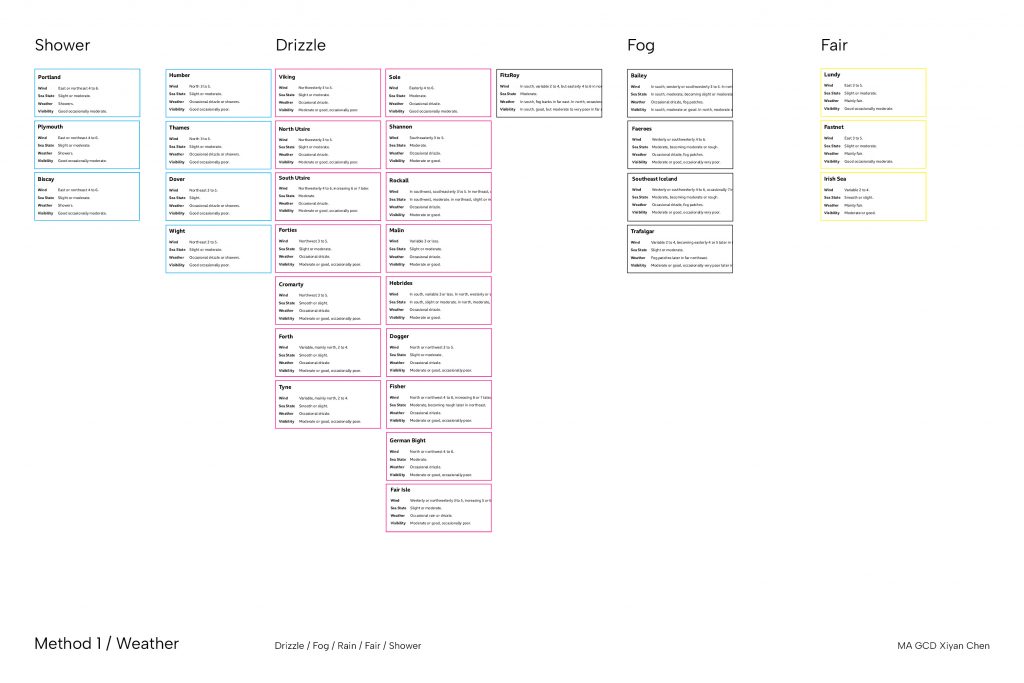
    Initial Methods

    1. Weather
      • Drizzle
      • Fog
      • Rain
      • Fair
      • Shower
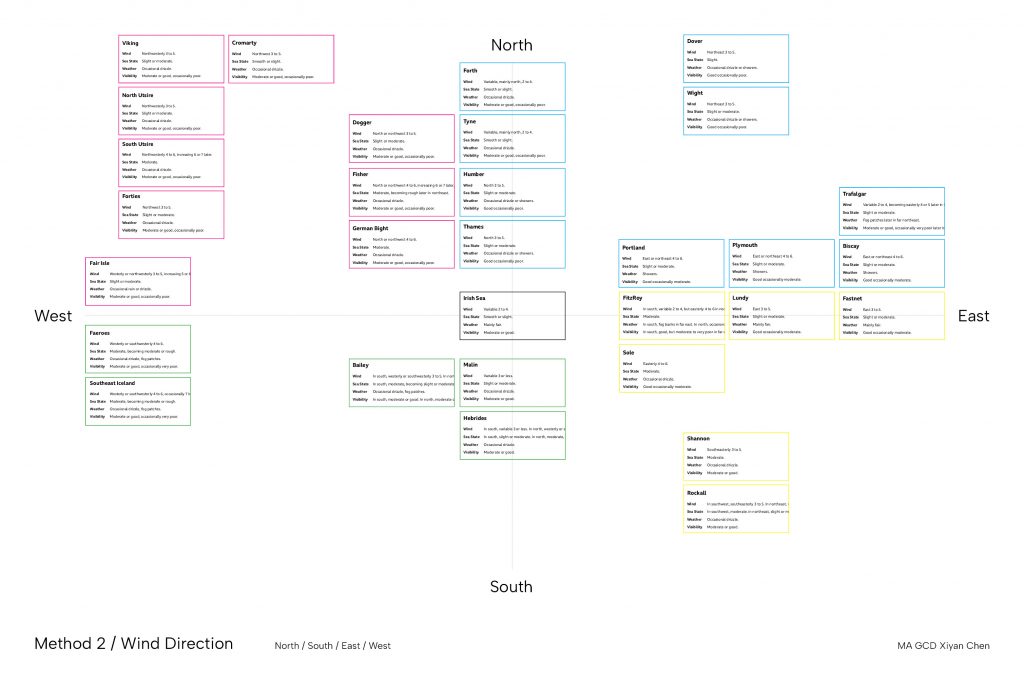
    2. Wind Direction
      • North, northeast, northwest
      • South, southeast, southwest
      • West
      • East
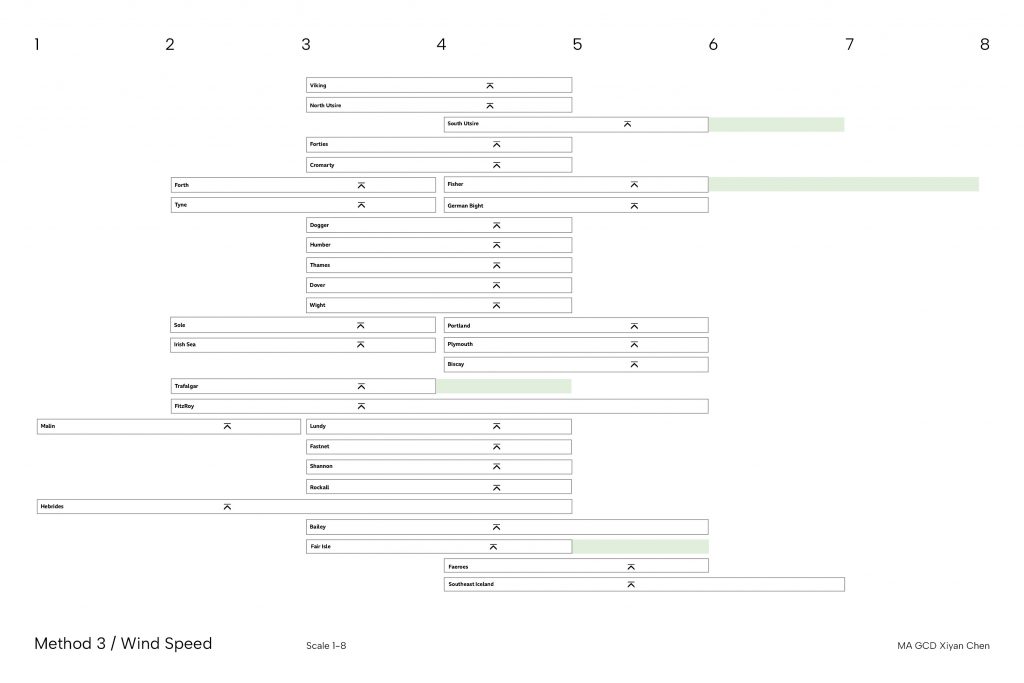
    3. Wind Speed
    4. Area shape

  • U1 Methods of Investigating Written Task

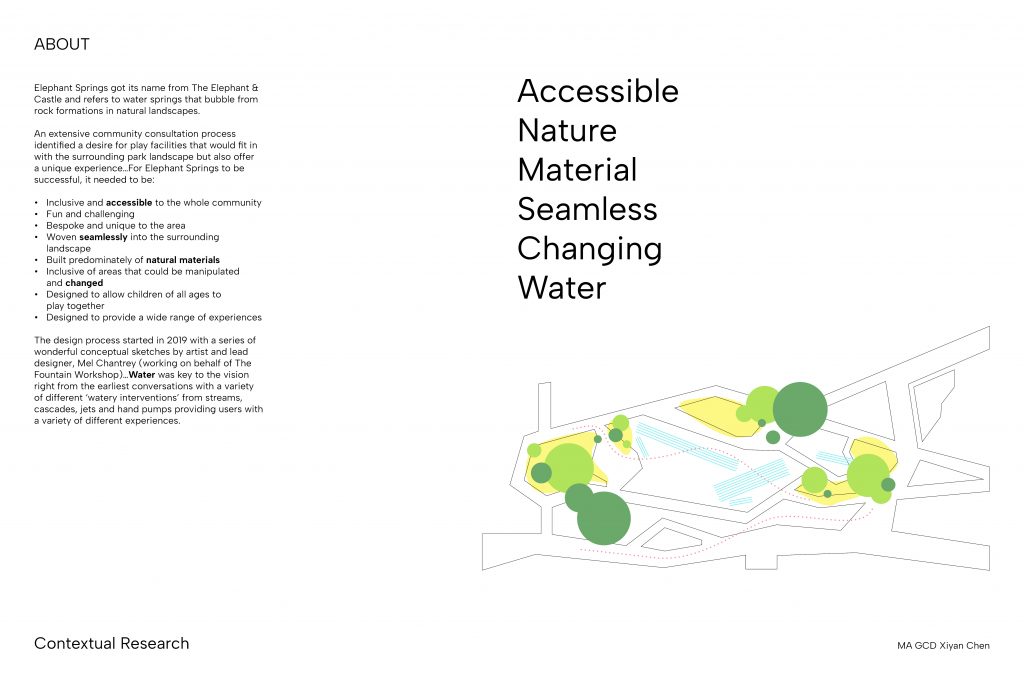
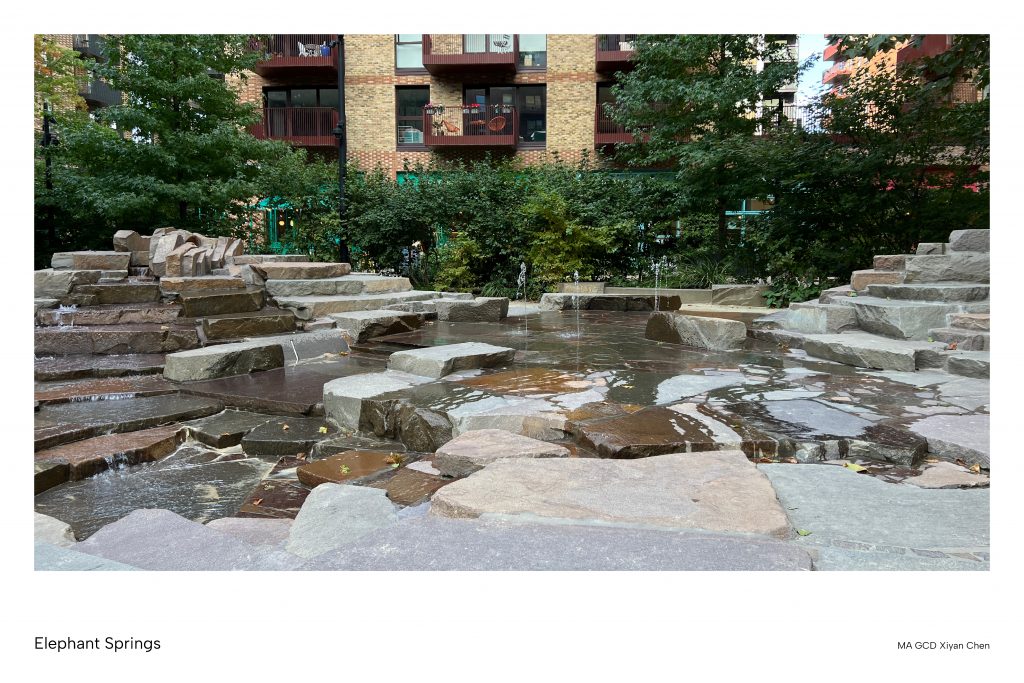
    Methods of Investigating Unit required an exploration of different research approaches to investigate a specific space. I chose Elephant Springs as my site of investigation, which is a recreational area in Elephant Park that includes interactive water features such as hand-operated pumps, cascades, and rock channels, surrounded by sand pits, trees and lush planting. The space is located within a busy residential area with high-rise apartments and emerging commercial infrastructures, demonstrating a highly mixed demographic profile.

    I referred to Venturi and Scott Brown’s idea to study the expansive megatexture and specific symbols within an existing environment. They argued in Learning from Las Vegas that “spatial relationships are made by symbols more than by forms” (2007, p.13), which can be understood through the various marketing billboards, traffic signs, and monumental landmarks in the Las Vegas Strip. Together, these structures form the megatexture of the commercial landscape. Contrastingly, Elephant Springs functions as a symbol of relief through its lack of commercial intensity and artificial interventions. Although the space remains the product of a curated design project, I noticed extensive use of natural elements to resist growing urbanisation. The park’s greenery and water features function like a massive billboard in the desert, effectively communicating the natural essence of Elephant Springs as a reprieve in the rapidly progressing city.

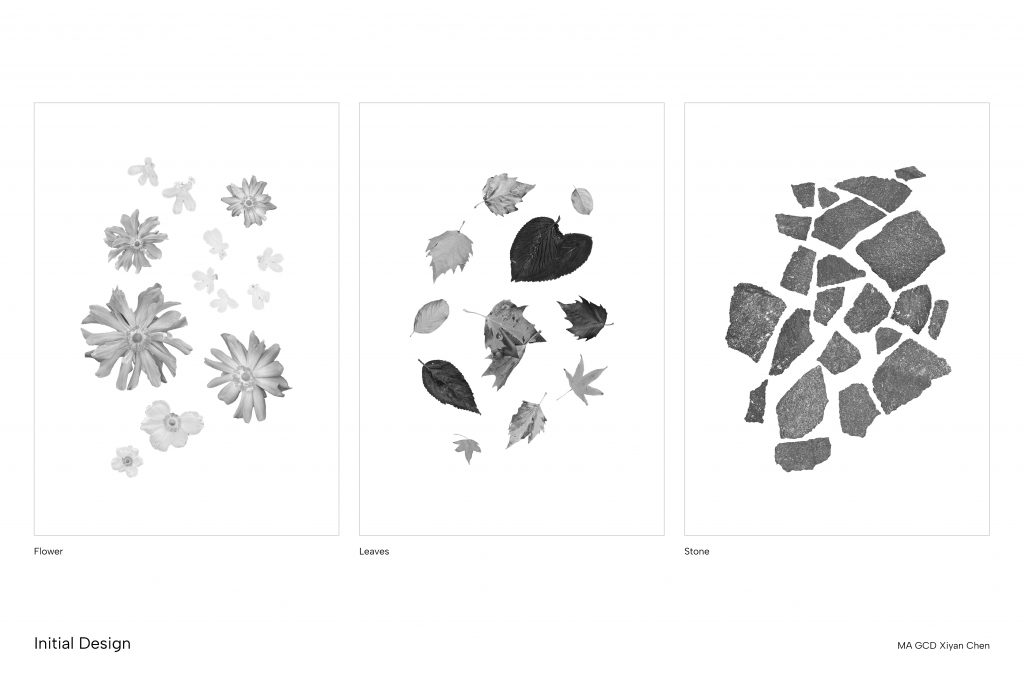
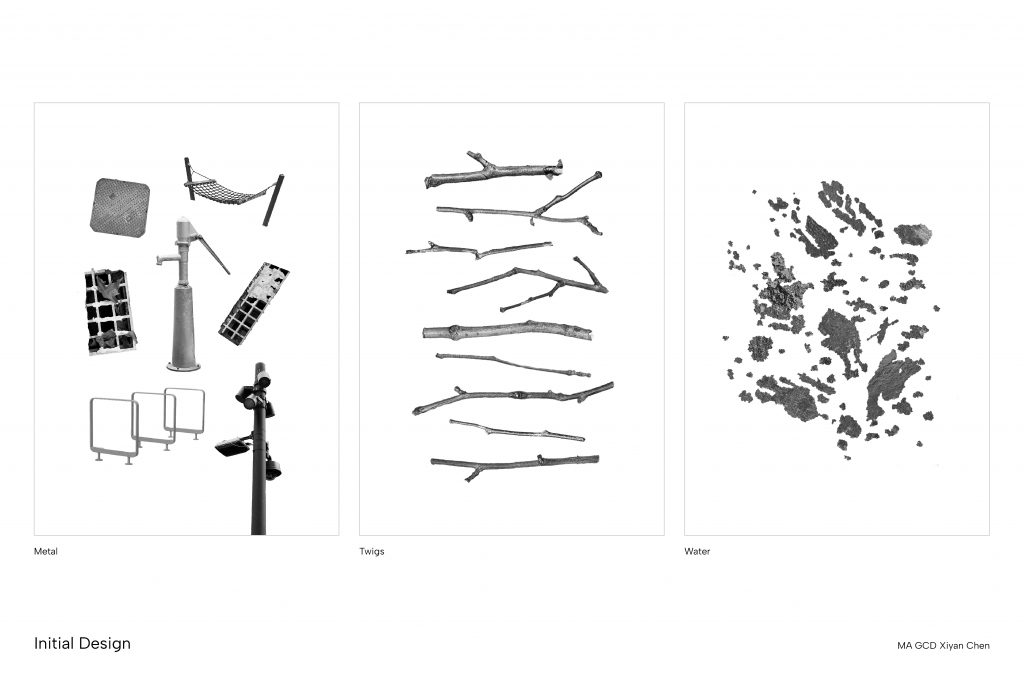
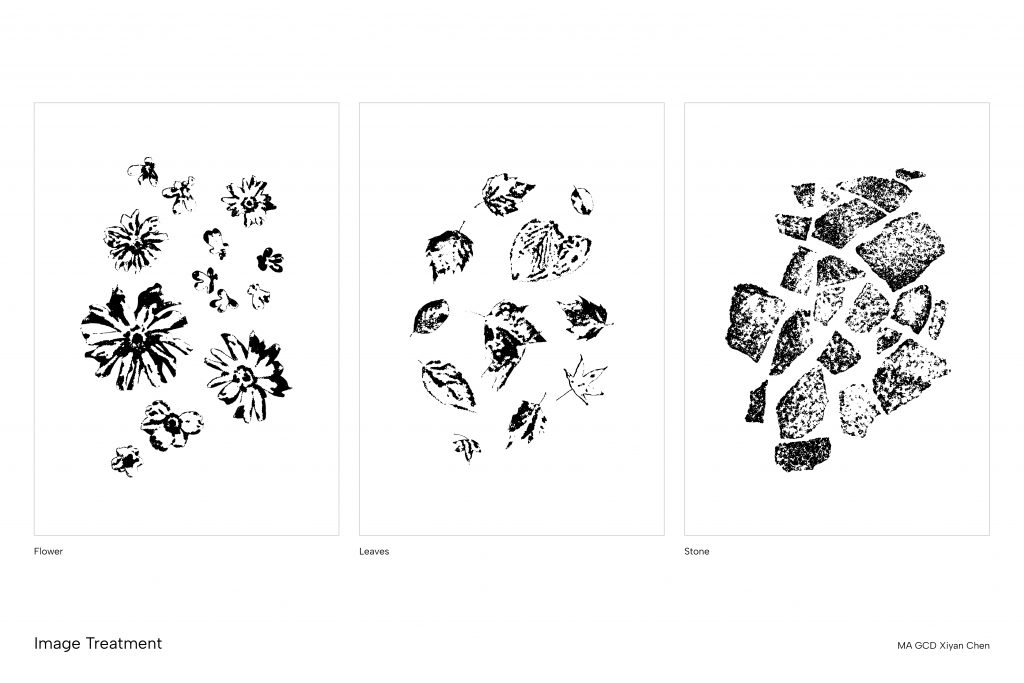
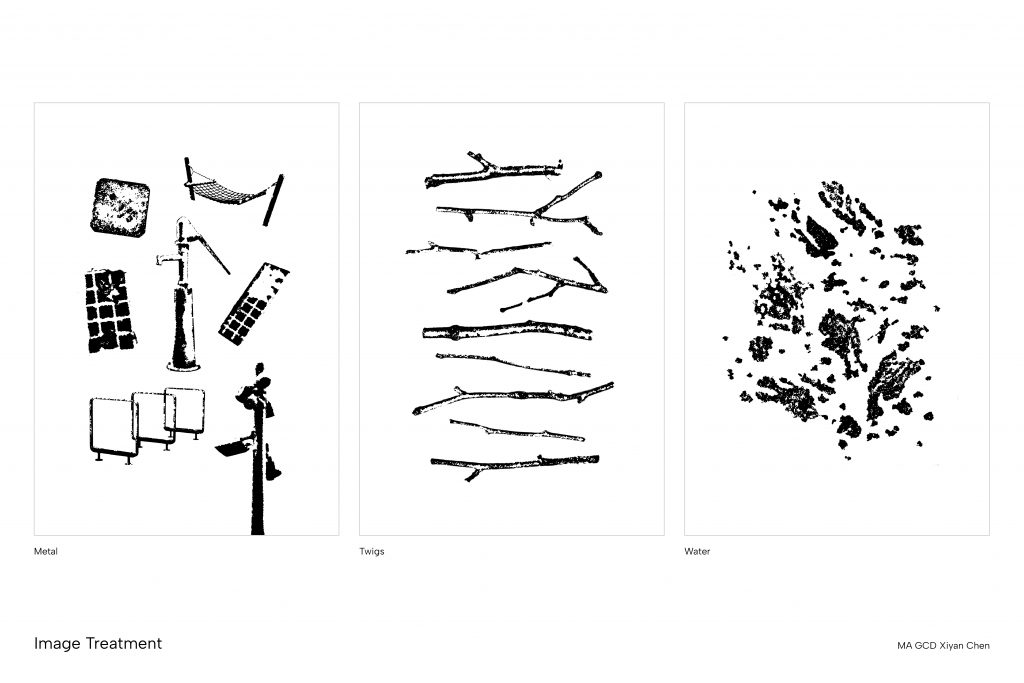
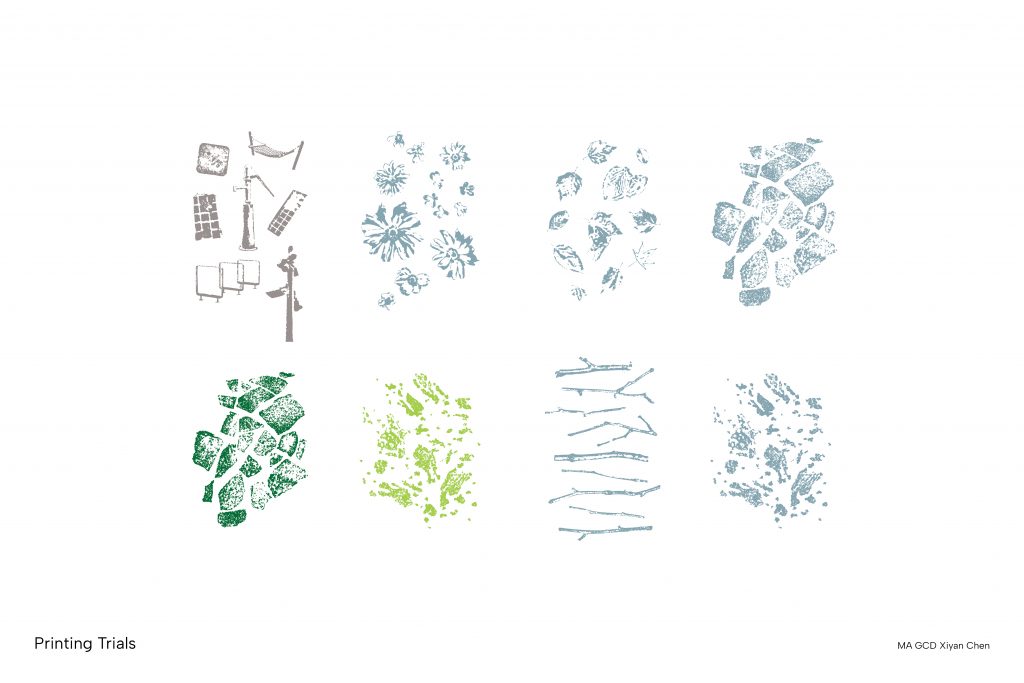
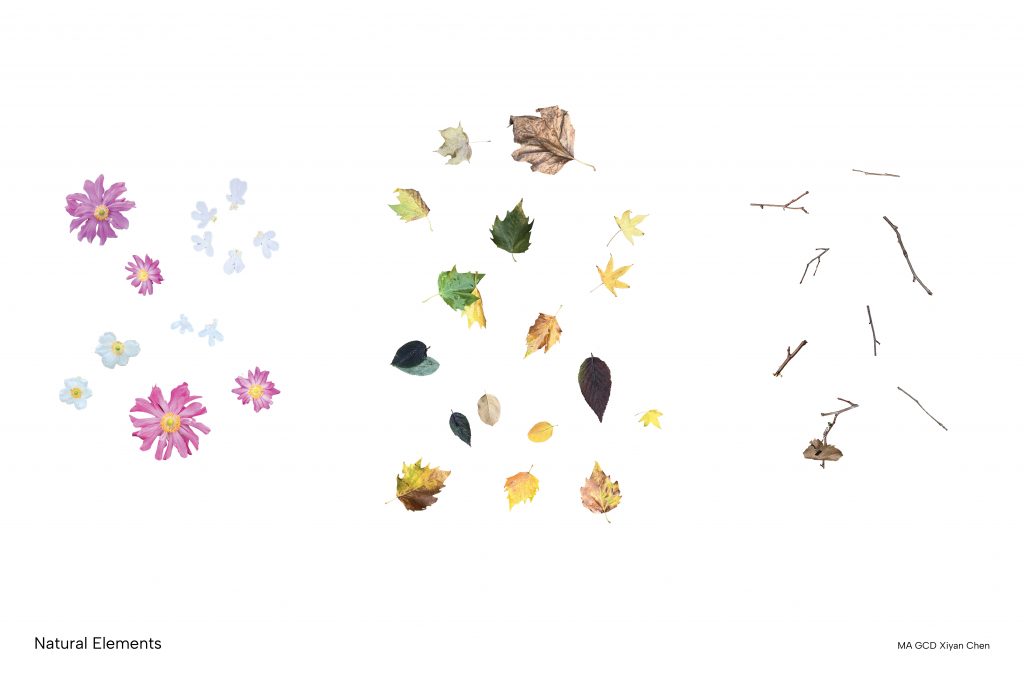
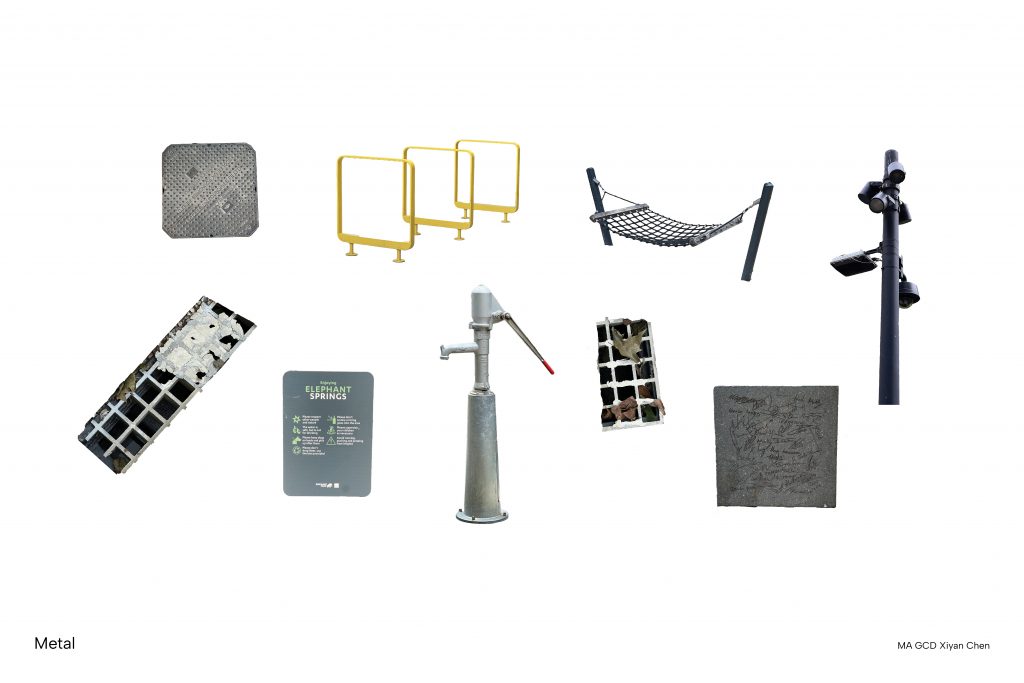
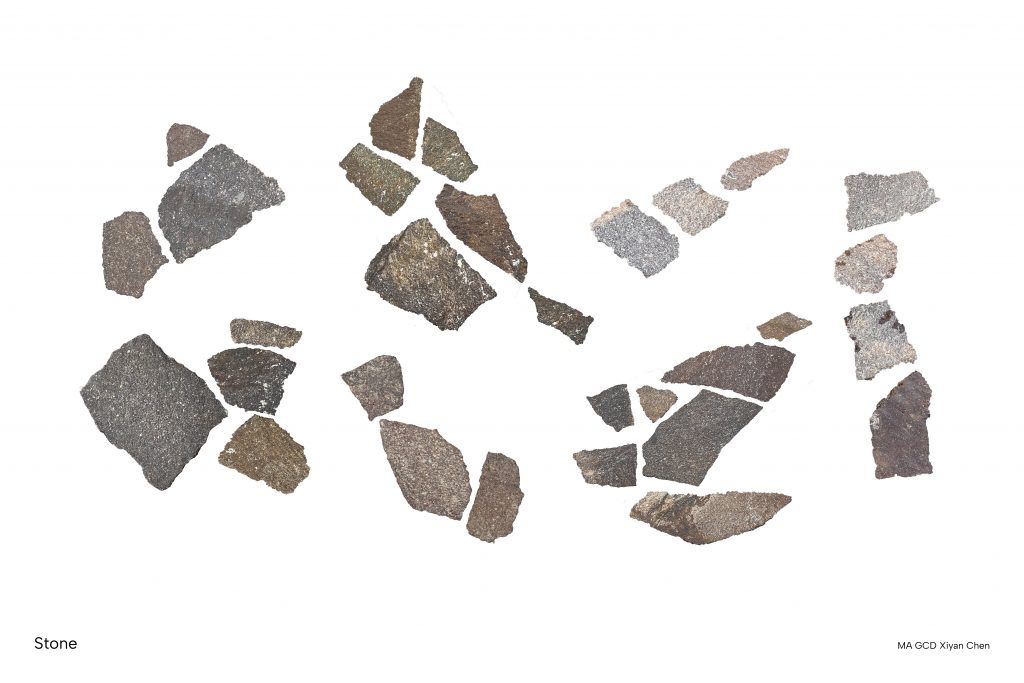
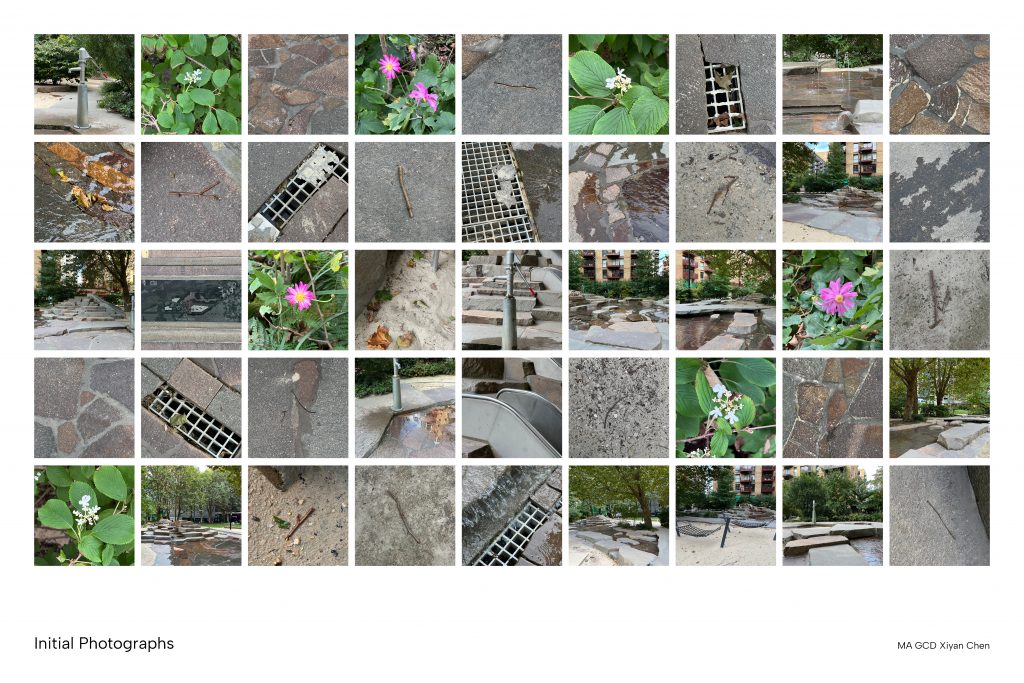
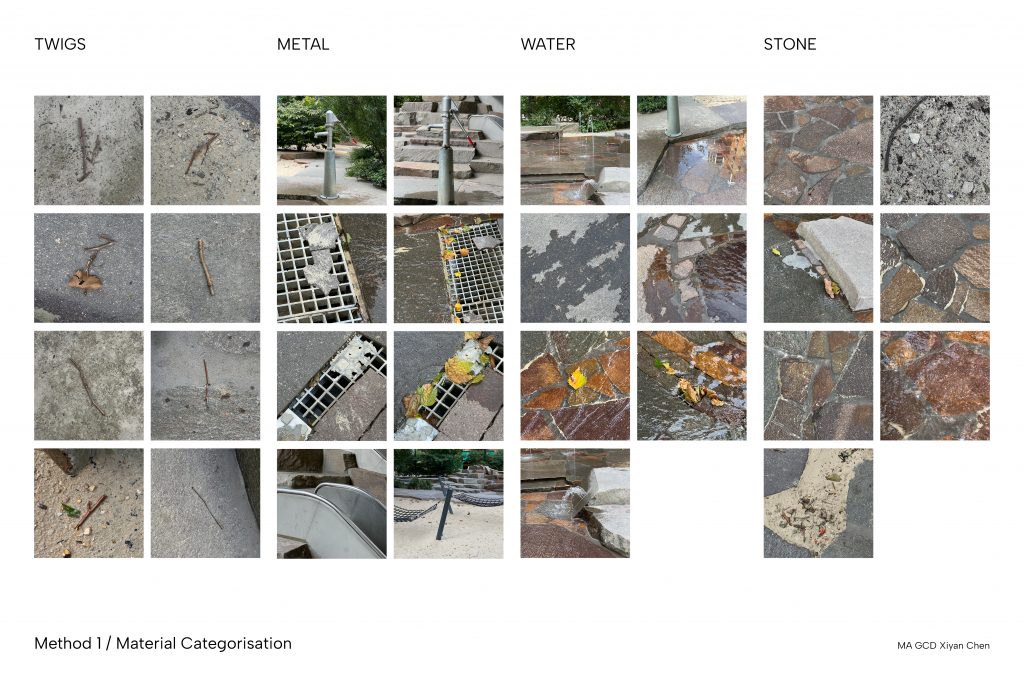
    After positioning the role of Elephant Springs within the wider context, I adopted Perec’s methodology to intensely scrutinise the minor details within the space. He suggested documenting “what is of no interest, what is most obvious, most common, most colourless” (1997, p.50). I approached the investigation in this manner and recorded a variety of seemingly redundant items, including fallen leaves, petals and twigs. This method facilitated a way of cataloguing the environment into categories based on its materiality to distinguish between the natural and artificial, thus enabling investigation of the space in fragmented forms. There was also the urge to observe the “invisible” infrastructures in the space. The fountain and sand pit are visible manifestations of an invisible network, which mediates the interaction between people and the space. Its ephemeral state of condition asks the audience to reconsider the value of nature in a modernised concrete jungle.

    This investigation of Elephant Springs employed complementary methodologies the understand the space at different scales. Together, these methods highlight Elephant Springs as both a large-scale symbol of resistance to urbanisation and an intimate collection of ephemeral moments that challenge our relationship with nature in the urban neighbourhood.

    Bibliography

    Elephant Springs – The natural play area in Elephant Park (no date). Available at: https://www.elephantpark.co.uk/natural-play-area/ (Accessed: 7 October 2025).

    Perec, G. (1997) ‘The Street’, in Species of Spaces. London: Penguin Books Ltd, pp. 46–56.

    Venturi, R. and Scott Brown, D. (2007) Learning from Las Vegas. Routledge.

  • U1 Methods of Investigating Final Delivery

    Delivery Ideas

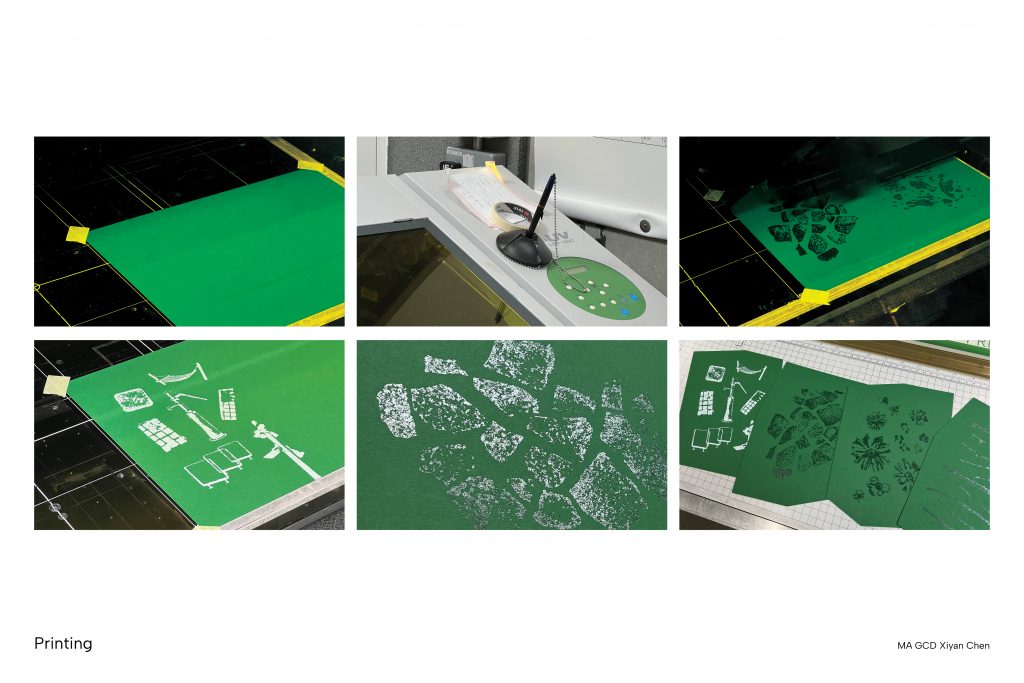
    • White UV print on black/green paper
    • Collection of irregular postcards

    Categorisation

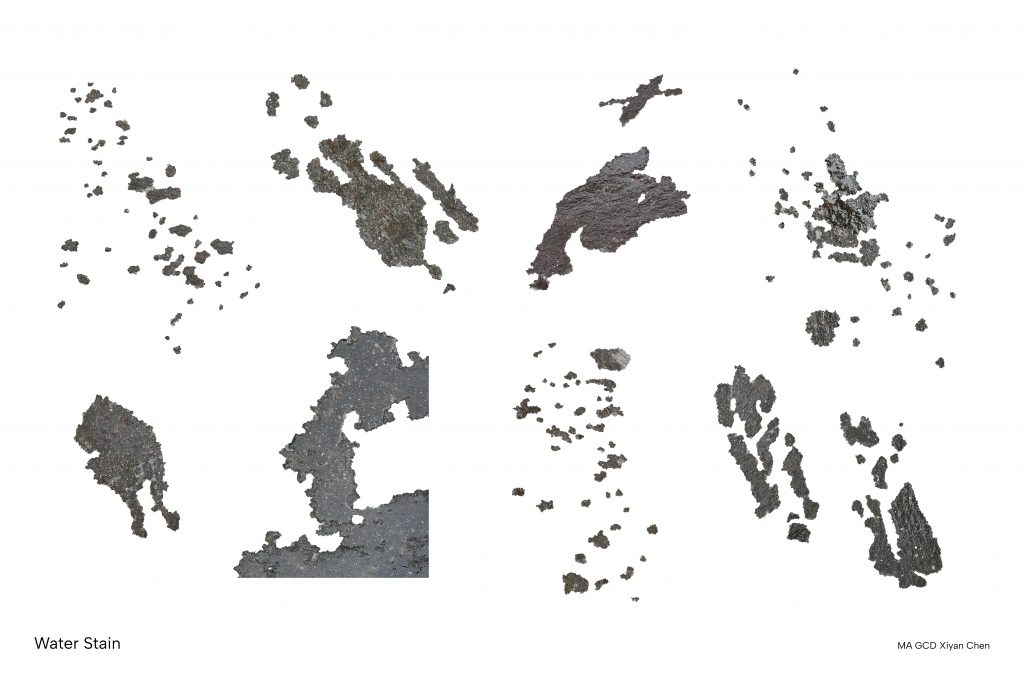
    1. Water stain
    2. Flower
    3. Leaves
    4. Twigs
    5. Pavement
    6. Artificial intrusion

  • U1 Methods of Investigating Further Investigation

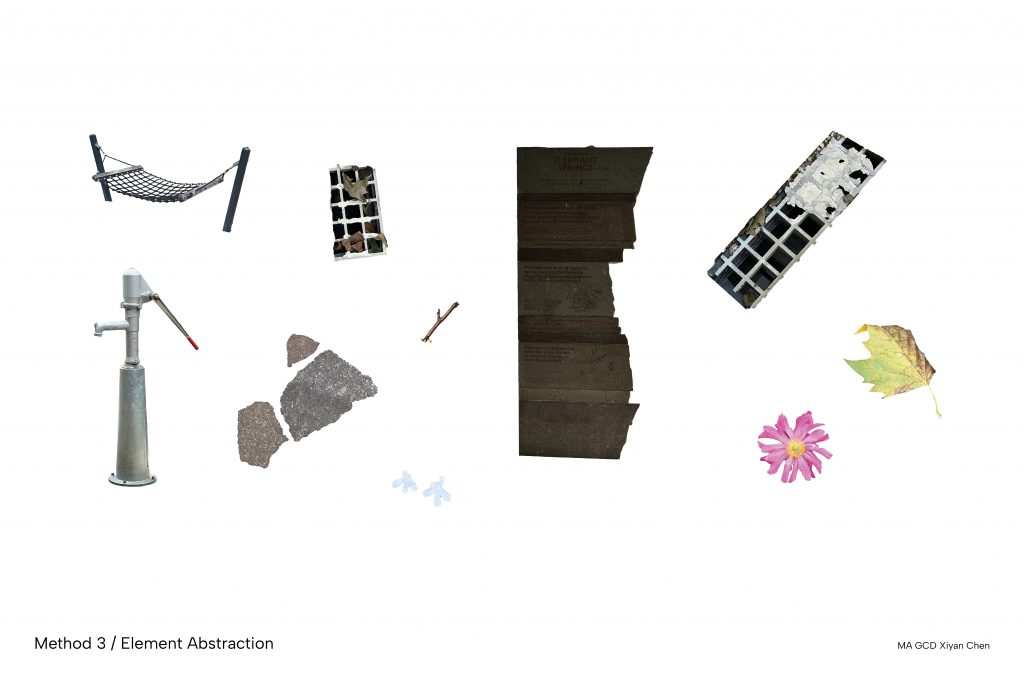
    Furthered the development of element abstraction method

  • U1 Methods of Investigating Initial Exploration

    Location

    Elephant Springs (21 Ash Avenue, Elephant Park, SE17 1FR)

    Methods of Investigation

    1. Photo of found objects
      • Flower
      • Twigs
      • Leaves
      • Trench cover
      • Water
      • Bench
      • Sand
    2. Categorisation of found objects according to materiality
      • Natural vs artificial
      • Smooth vs rough
      • Ephemeral vs permanent
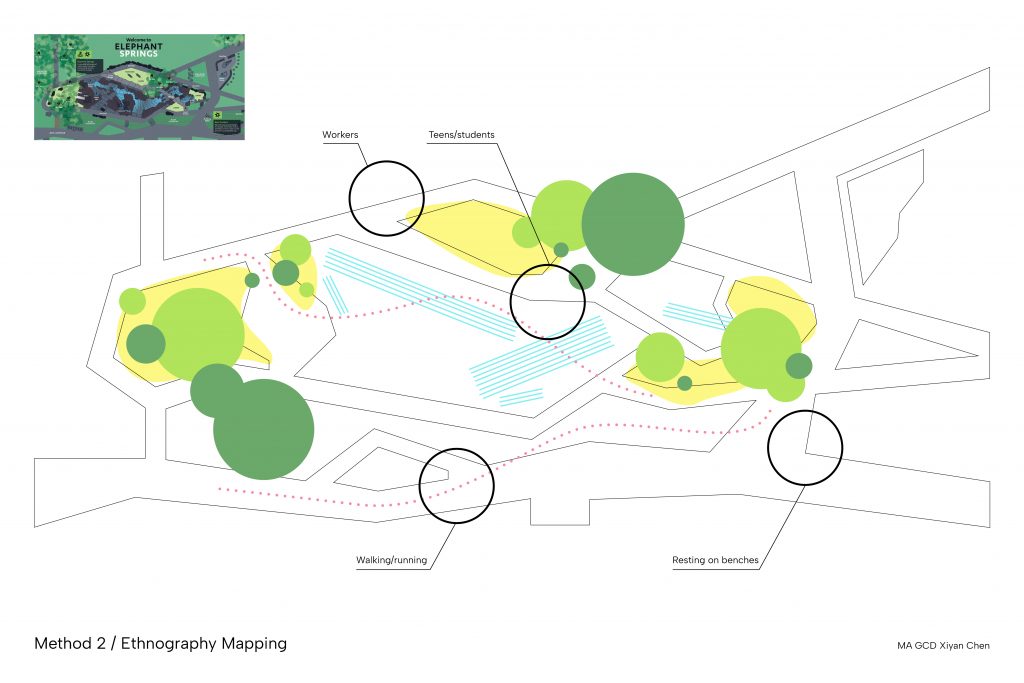
    3. Ethnographic mapping of the space
      • Children
      • Construction workers
      • Parents
      • Young people/students
      • Diners from nearby restaurants
    4. Extraction of elements from the environment